

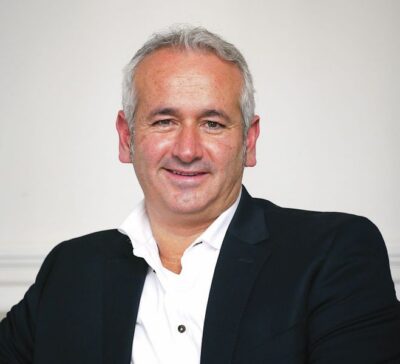
Turning strategy into action isn’t accidental—it’s project-driven. This conversation looks at how strategy gets delivered inside the project-driven organization, with Antonio Nieto-Rodriguez sharing practical guidance on prioritization, navigating stakeholders, and moving beyond incremental work to spark real innovation. This is a practical, thought-provoking conversation that will challenge how you think about projects, priorities, and your role as a project leader.
Chapters
00:00 … Intro
03:48 … A Project-Driven Organization
05:37 … Pursuing Ruthless Prioritization
07:50 … Difficult to Kill a Project
09:05 … Navigating Frequent Reassignments
11:36 … Organizations that Multitask
14:18 … Cutting Back on Projects
17:34 … Plan for Moonshot Projects
19:33 … Take a Hard Look at Processes
22:58 … An Active, Committed Sponsor
25:54 … Understanding Benefits
27:10 … Project-Specific Performance Metrics
30:35 … Always Ask about Priorities
31:45 … Today’s Project Manager
34:23 … Find Out More
35:41 … Closing
Intro
ANTONIO NIETO-RODRIGUEZ: …when I look at the projects that companies are running, I would say 70, 80% are more incremental improvements. It’s really frustrating that companies, they might take a bit of risk on revenues, mostly through M&A. And that’s a habit practice going forever. But I don’t see bold ideas. I don’t see them…. Where are these? Where are they? I think we’re very poor, very poor in terms of innovation, at least for these bold, big, exponential ideas. And if you don’t do that, if you just do incremental projects, you’re not going to survive.
WENDY GROUNDS: You’re listening to Manage This, the podcast by project managers for project managers, and we’re thrilled to have you with us today. I am Wendy Grounds, and in the studio with me is Bill Yates. If you’re enjoying the show, we’d love to hear from you. It can be on our website, Velociteach.com, you can leave a comment, or on social media or your favorite podcast app. Your feedback helps us keep inspiring and supporting project managers just like you. If you’ve got questions about our podcast or about project management certifications, we’re here to help.
BILL YATES: Velociteach is here to support your growth and success. InSite is our project management mobile learning platform where you can prepare for your PMP certification or get better at your job by choosing from over 70 high-quality and engaging courses. These courses cover a variety of topics such as communication, leadership, status reporting, the work breakdown structure, and more. Each course aligns with the PMI Talent Triangle, making earning and reporting PDUs easier than ever. Visit us at velociteach.com today to get started.
WENDY GROUNDS: Today’s episode is a special one. We’re welcoming back someone who is truly shaping the future of project leadership, Antonio Nieto-Rodriguez. He’s ranked among the 50 most influential business management thinkers in the world by Thinkers 50.
You may remember him from Episode 148, where he talked to us about how to launch, lead, and sponsor successful projects. Antonio is a leading voice in project management and strategy implementation, and he’s the champion of the project economy, a world where projects drive growth, innovation, and business success. His new book, “Powered by Projects,” came out this January from Harvard Business Review Press and is already making waves.
BILL YATES: Wendy, I’m so excited to have another conversation with Antonio. He is really a thought leader in our industry, and he just gets it. When I’m reading through his book, I’m making notes on the margins, on the sides; I’m underlining; I’m high-fiving him across the Internet. Some of these concepts just resonate so well with project managers. And really, this book and the conversation that we’ll have with him, we’re going to talk in three different areas.
We’ll talk about, you know, questions and strategies for the project manager. Also, advice for sponsors or advice for project managers to manage their sponsors. The same thing with executives. There’s great information in the book and in our conversation about executives, advice for them from a portfolio standpoint. But it’s also helpful information for a project manager as I look at the grassroots level. How do I as a PM influence executives and influence those sponsors? So, looking forward to this.
WENDY GROUNDS: So, folks buckle up. This conversation is full of big ideas, fresh energy, and a look into the future.
Hi, Antonio. Welcome back to Manage This. We’re so excited to talk to you again.
ANTONIO NIETO-RODRIGUEZ: Thank you for the invitation. I’m super excited. I love your podcast. So, thank you for having me again.
A Project-Driven Organization
BILL YATES: Antonio, thank you so much for giving us some time today to go through. I read through the book. I’m super excited about it. I, even before we set up this recording, I had to go ahead and go on LinkedIn and share a few of the nuggets. It’s just so good.
One of the things that I want to get into is obviously this concept of a project-driven organization. That’s the, you know, like the linchpin, the foundation for this book. You describe the book as it’s a blueprint for how leaders can remake their organizations for a world powered by projects. So, what does a project-driven organization look like? And why is this shift so important today?
ANTONIO NIETO-RODRIGUEZ: Well, it’s been a long journey to understand that there was something fundamental shifting in the way work gets done. I talk about this concept, the project economy, which basically says that the operational work for humans is decreasing. There’s going to be AI and robots taking care. And then the type of work that remains is projects. And, yeah, and we will be changing many, many times the type of work we do as opposed to just having a few things.
So, and that reflection led me to the point that, okay, then we need different skills. But that’s not enough. We need different leadership and different organizations. And that’s where I think we struggle the most because organization, both the culture, the hierarchies, the governances are very difficult to change. So that’s where, yeah, the concept came of project-driven organization where projects become the core engine of generating value as opposed to the operations, which has been like this for decades.
Pursuing Ruthless Prioritization
BILL YATES: Yeah, that’s outstanding. And one of the things that leads me into a major theme that you have in the book, and it’s this idea that project-driven organizations pursue ruthless prioritization. I love those two words, “ruthless prioritization” of projects.
And to that end, I’m going to quote you, Antonio. I love this comment that you made, page 99 in the book. You said, “In my experience, most companies carry far more projects than they have the capacity to manage or execute effectively,” which I totally agree with. That’s been my experience, too. You say you often challenge leaders to cancel 50% of their projects within a week. And I think, first of all, I would love to be in the room when you throw down that challenge to executives. That’s fantastic.
WENDY GROUNDS: Yeah. Can you explain what leads you to say that, and then why prioritization remains such a challenge for so many organizations?
ANTONIO NIETO-RODRIGUEZ: Of course, this is a lot of observation. And in the end, it’s a bit commonsense when you look at it from what I’m going to say. Today and for the past years, maybe decades, launching projects is seen as something good, as something innovative. We were strong. We innovate a lot. And we invest. We take risks. So, launching projects has accelerated the speed of change, as well. It has increased competition. So normally companies don’t mind even launching so many projects. But then when you look at how often do they kill them or finish them, it just takes forever.
If you keep adding, and you don’t deduct, then it’s like I always show like a highway, which is almost fully pack of cars, and you added more cars and cars and cars. Then all your projects get impacted, not just the big ones, but everything that you’re doing around projects. It just goes slower, and it’s just more frustrating for everyone. So, from the companies I work, this is confirmed. But overall, I think we love to launch projects, especially senior leaders. But then when it comes to do the work, there’s no capacity because everybody’s already so fully booked.
Difficult to Kill a Project
BILL YATES: Yeah, exactly. Exactly. And one of the key points that you make in the book is for executives, for leaders who are sponsoring and launching these projects, they need to have the discipline to know when to kill them, to know when to stop a project, and they have to look and think about the limited resources they have. Yeah. So, what’s the problem with that?
WENDY GROUNDS: Yeah, why is it so difficult to kill a project?
ANTONIO NIETO-RODRIGUEZ: Well, it’s emotional. It’s like, here in Europe, in Spain, we all have like a kind of subscription for going to the gym, for example.
And you know you never go to the gym. But why don’t you kill it? Why is so difficult? There’s always an emotional attachment to projects. I don’t know why. I do some experiments with people, and it’s like when you launch a project, you create something new. There’s dreams behind the solution. The same for work projects, it’s just difficult. And with the book, I want to turn around. I think you are strong when you admit that it doesn’t work anymore, that you cut them; right? It’s sometimes like relationships. Sometimes it’s better if you cut them and move on.
BILL YATES: Yeah.
ANTONIO NIETO-RODRIGUEZ: So, there’s many attachments that makes this very difficult.
Navigating Frequent Reassignments
BILL YATES: Antonio, I’d say related to that, you talk about the value, the learning that we have from failing, and just the reality of we have limited resources, and we need to use those appropriately. One of the things you said on page 50 was when you were talking about ruthless prioritization, “it allows resources to be reallocated dynamically based on the performance of the project and the emerging market demands”. So, I have two hats I’m wearing here. One is like a small business owner hat or a business unit. So strategic makes a ton of sense.
But then I also wear the hat of the project manager. And I think, okay, this would be stressful for a project manager if I have – let’s say Antonio is my sponsor. And he’s like, okay, that project that we started three weeks ago, yeah, you know, things have changed in the market. So, we’re going to kill that.
But I’m going to start up this new one. So, I’m going to have your team. They’re going to pick up a few extra resources from another department. Here’s a new initiative that we’re going to go with. That’s exciting to me as a business unit owner. But as a project manager, that creates some stress. So, what advice do you have for the project manager who’s having to navigate the frequent shifts or the reassignments?
ANTONIO NIETO-RODRIGUEZ: I think it’s something that we need to learn to deal with. That’s why sometimes in the book I say we should treat, at least at the beginning, projects more like experiments.
BILL YATES: Yeah.
ANTONIO NIETO-RODRIGUEZ: In experiments you can fail. And because the word project goes again with that bigger connotation of investment, projects can be stopped by sponsors because, yeah, they came up with something new.
But also, I try to empower project managers to say that sometimes you should be the one that says, listen, this project doesn’t make sense anymore. Six months ago, it was making lots of sense. I care about the company. I care about the resources. And I care about their strategy. So, I don’t mind saying better to stop it or put it in pause for the next three months, and we can focus now everyone on this one, which has become a big, important priority for us.
So having that kind of open dialogue about your projects as potential opportunities for pivoting, it’s something that I don’t see. And this is what is a project-driven organization where projects can be seen like that as learning opportunities, and better for the next time. And so that’s kind of a big cultural change.
Organizations that Multitask
BILL YATES: Yeah, yeah, yeah, it is. To me, there’s a fundamental truth that prioritizing and limiting projects is crucial to success for an organization. That’s just fundamental. Like for me as a project manager or as a team member, I know better than to multitask. You know, I’ve had plenty of research saying, hey, Bill, it’s not effective. Don’t multitask. You know, here are the drops in efficiency that you have. So, from a leadership standpoint, try to limit my team so that we’re not shifting gears completely.
One of your fundamental points is have those teams be dedicated; right? 100%. We’ve all worked on projects where we’re wearing multiple hats, you know, multiple projects. I’m doing some, some maintenance and support, plus I’m working two projects. You know, every time I put something down and pick something new up, it’s just inefficient.
So, the same way that multitasking is bad for me and for my team members, it’s bad for an organization. This completely makes sense. I think of Cal Newport and “Deep Work.” We quote his findings in his book a lot in our classes. And we give practical techniques. You know, here’s the Pomodoro Technique to help you focus as an individual.
Well, why can’t we do that as an executive; right? You know, okay, I have all these lovely projects that I want to have. I don’t have enough resources for it. So, what do we do with that?
ANTONIO NIETO-RODRIGUEZ: It is one of the biggest mysteries for me, how companies that have 10,000s of people – I work for a big pharma, and I work for many – I advise or train workshops. And they have thousands of people, tens of thousands. And how come it’s so difficult for a company to just take 20 people out of the 50,000 just to fully dedicate them to, why do they have to be all part-time doing other things, maybe other projects?
This lack of flexibility, which annoys me, and it’s frustrating because we know it’s proven that when you dedicate resources fully to a project, then this project will not not struggle. They all struggle. But it will just – it will create what we all want, this high-performing team, as teams create more focus, get more attention.
But it’s something that I want to push with the book. And I talk in some HR conferences. I think we need to get to that flexibility where resources are not stuck in the roles, in operational roles, even worse. They are afraid of what will happen when the project is over. And we need to get through those traumas. I don’t know where they come from. But it’s fine. You will find another job afterwards. Don’t worry.
Cutting Back on Projects
BILL YATES: Yeah, yeah, yeah. And just as a follow up to that, you offer what I thought was outstanding practical advice for those executives who are trying to decide, okay, I know I need to put my company on a diet when it comes to projects. I’ve got way too much on their plates, way too much. They can’t focus. I’m asking them to multitask when I know that’s not the right way to do it.
So, you give advice on guidelines for project capacity. Four different types of projects. And you give it 50, 30, 10, and 10. Would you kind of walk us through when you think about what led you to think, okay, this is maybe a good guideline or target for an executive to go with when they talk about looking at their projects and seeing what types or categories they fall into?
ANTONIO NIETO-RODRIGUEZ: Yeah, this is a long reflection that I had for many years, is we’re trying to do all the projects in the same way, use similar tools, templates, approaches. And then not all the projects are the same. And this happened when I was writing the “HBR Project Management Handbook.” I connected with the types of innovations that Christensen Clayton wrote and on the innovations dilemma. And I said, “Why don’t I just piggyback on that idea?”
And he said, there’s three types of innovations. It’s about sustaining, it’s about efficiency, and then it’s transformation.
So, I said, “Well, this innovation will lead to different types of projects.” And that’s where I came with these sustaining efficiency projects, which is running your business more efficient. Sustaining is about creating new growth and revenues, and then the transformative is those bold ideas.
And so, I connected those concepts just as a follow-up, as natural flow from innovation. And what I say in the book is that it’s a nice way to look at your portfolio of projects, transformations, investments in changes. How much do you dedicate if you put, I don’t know, 200 million in changing projects, how much goes into your efficiency space to run the business? How much goes into growth, and how much goes to transformation?
I put a model there, I say, at least maybe 50% of your project’s capacity and budget should go into keeping the business as sufficient and perfect. That’s good. 30% maybe about growth. And then I just said 10%, not 20, on transformation. I think most companies should have a bold idea, an exponential idea, which don’t see, that’s another area of frustration. But then at 10% off so that we have a bit of spare capacity, to allow us to pivot easily without impacting what you already are doing.
And again, this is maybe a bit idealistic because it’s far from reality. But this is how I see it. We need to have that bench. I love sports. You always have a bench, right, to get fresh people and to support and get some people out, some people in. But we don’t have that, unfortunately. But that’s the idea behind what you were talking about.
Plan for Moonshot Projects
BILL YATES: Yeah. I’ve found that to be really helpful. And I like that third type, the transformative project. You described it as a moonshot. I like that. I like the Jim Collins BHAG, you know, big, hairy, audacious goal. So, you have 10%. You know, again, you go back to that $200 million budget. That executive can kind of look at it and go, all right, it’s an industry-wise practice for me to set aside 10% of that budget for those moonshots, for those BHAGs, because one of those is going to hit.
You know, maybe one out of 10 will hit. But when it hits, it’s going to be big. And then I know I have 10% in reserve. So, if it does hit, when it does hit, you know, I’ve got some extra gas I can put on that fire.
ANTONIO NIETO-RODRIGUEZ: And for me, that leads to another big message for me is that when I look at the projects that companies are running, I would say 70, 80% are more incremental improvements. It’s really frustrating that companies, they might take a bit of risk on revenues, mostly through M&A. And that’s a habit practice going forever. But I don’t see bold ideas. I don’t see them.
They’re not pivoting their business like, I don’t know, for example, you can look at Tesla, and Elon Musk is already talking about robots. And Steve Jobs was having the iPod and was thinking about the iPhone. Where are these? Where are they? I think we’re very poor, very poor in terms of innovation, at least for these bold, big, exponential ideas. And if you don’t do that, if you just do incremental projects, you’re not going to survive, I think.
BILL YATES: Those two quick examples you gave, I thought it was very astute of you to point out that, in those cases, they were involved. They were hands on, especially Steve Jobs. You know, he was working on that new invention of the iPhone, and it turned out to be a pretty good product. It was wise of him to spend so much time on that.
Take a Hard Look at Processes
One of the themes that you have in the book that I very much appreciate is we need to streamline processes. If we’re hoping to have these breakthrough transformative projects, some things have to change.
You know, to your point, there’s governance. There may be compliance checklists or processes that we put in place that are just overly rigorous for what we’re trying to do here. So, we need to take a hard look at processes.
There were two pieces of advice I just wanted to point out. Then we’ll actually ask you a question. But these were so good. One piece of advice you gave was to delegate authority as close to the work as possible. So close to the work being performed. I love that. You gave a great example with IKEA. And then another is just simply, no process is sacred.
WENDY GROUNDS: Yeah. You remind us, you know, leaders that no process is sacred. So, could you walk us through? You have four key questions that you offer to help teams decide whether to streamline, change, or eliminate a process. Can you walk us through that?
ANTONIO NIETO-RODRIGUEZ: Yeah. The principle is that many companies put their processes sacred. So, it’s like really the process drives the decisions, and it’s kind of imposed directly on the people. And that’s very frustrating because like we said, projects are different. We’re building new things, and there’s a need for creativity. There’s a need for bending the rules. Otherwise, we’re just going to be stuck forever into the standard process.
The processes were great for the operations-driven world where efficiency was one – efficiency and control. And here we’re talking about something that is not about efficiency and control.
So that’s why I say in the book that there’s a need to challenge the process that we have because they’re often about the past, and projects are about the future. I talk about, first, does the process accelerate project execution? So, does this really help you to go fast because it’s key? If not, I think this process could be eliminated or not used at least for your transformation.
Does this process clarify accountability of ownership and risk management? Often an issue that we’ve seen transformation is that people don’t know who takes care of what. So, if this helps for the accountability, perfect. That’s a valid process.
Does this process provide critical insights that enable better, faster decisions? So, is part of that helping us to again go fast and don’t get into bureaucracy?
And the last one, could this process be automated or use AI? think AI can do a lot of these things. So, the more we look into that, the better. It’s really about customizing the process for you, eliminating as much as possible, and just keeping the key ones, the ones that help you for accountability, decision making, insights, and some of them embedded in some AI applications. So that’s kind of what I think can make a big difference.
BILL YATES: Yeah. Antonio, those were great. I appreciate that you gave us guidance on how frequently you do this. It’s not, okay, I’m going to ask these questions one time in a project, and I’m done. No, this needs to be a regular rhythm. You know, I think you recommend every 90 days or so. And that’s great advice.
An Active, Committed Sponsor
I want to shift gears with you and talk about sponsors for a minute. What makes them effective, what makes a sponsor not effective? And, you know, you make the point that project-driven organizations require dedicated, active sponsors. There’s a quote you have of a CEO of RGP where they say you need relentless senior executive involvement all the way.
So, what does that truly active, committed sponsorship look like in a project-driven organization? Could you share one or two of the tough questions that sponsors should be ready to answer?
ANTONIO NIETO-RODRIGUEZ: Yeah, for me, there’s a couple of things that make a big difference in transformation. And one of them is the role of the sponsor. I think many senior leaders are not used to work on this space. They’re used – they came through operational business organization, and projects was something they were delegating, transformation was outsourced maybe to consultants.
So, I think they have not experienced, they don’t feel comfortable in that space. Most of them, they spend most of their time in their comfort zone, and comfort zone for them is running the business where there’s hierarchy, when you can measure performance, when you have targets, you can push the teams. Outside of the comfort zone is transformation, change projects where there’s very little hierarchy. People don’t report to you.
And so that’s where I think the bigger change can happen when leaders actually learn that they need to spend more time in that space – a great example, of course, is Steve Jobs when they launched the iPhone. It’s reported that he was spending two days per week driving that project from the beginning. And when was the last time anybody listening to this podcast, they saw their CEO spending even two hours per week; right?
So, and they asked Steve, why are you spending so much time in this? And he said, “Why should I not? This is the most important thing that we’re doing in Apple. So, it’s where I should be; right?” And I think this is where there’s a big gap.
And that’s why I created these 11 tough questions where I really like to share, but it’s a bit of a self-reflection. Do I have the capacity? Do I have the knowledge to support in this transformation? And do I have the time to dedicate? Because that’s one of the bigger issues. I see many projects with the CEO as the key sponsor, and people think that that’s good. And it’s not good because if the CEO has no time, we need to try to be stronger on the sponsorship role and making sure that we get that, and we stop any project without that.
Understanding Benefits
Another thing is that do the sponsor understand the benefits? Are they clear? Can we measure? One thing that I talk a lot in the book is if you have benefits that you cannot measure, don’t call them benefits. They’re not benefits.
BILL YATES: Right.
ANTONIO NIETO-RODRIGUEZ: They’re talking about efficiency gains or creating more agility or – this is just lingo; right? It’s telling me how much we’re going to save; how much we’re going to do. And this is something that the sponsor should be aware, should be participating. So, there’s the tough questions. There are 11 self-reflection questions, which sponsors are always a bit afraid because they don’t get 11 right.
BILL YATES: Yeah, there’s always room for improvement there. I thought those were very insightful. And I think for project managers that are listening now, when you get a copy of this book, it’s around page 120, 123, you’ll see those questions. And it could be an awkward conversation, but I think it’s very valuable for a PM to talk with their sponsor about it and say, you know, the research shows the more active, the more visible you are, the more likely we’re going to have success. So just how important are the benefits that we’re trying to create here with this project because I need you; you know?
ANTONIO NIETO-RODRIGUEZ: Exactly. Exactly. So important.
Project-Specific Performance Metrics
BILL YATES: Antonio, you’ve mentioned this, and I want to go a little bit deeper, the concept that project-driven organizations develop and rely on project-specific performance metrics. You know, you emphasize that project-specific performance metrics should center on outcomes, not effort. I want to just pause on that. Outcomes, not effort. That is so key. I’ve had conversations both at work and within, you know, family or relationship situations where I’ve talked about this concept it’s so true. Outcomes, not effort.
So, my question goes like this. How can a project manager work with a sponsor to uncover the metrics that truly matter? What questions should they be asking that sponsor? How do they get to the metrics that are really key for that sponsor?
ANTONIO NIETO-RODRIGUEZ: Yeah, this is something that I think is crucial. And it’s something that we don’t do very well. I think there is some old habits in how we define outcomes in projects, which are mostly top down. So basically, I launch an initiative; and I say, “Bill, Wendy, this is what you’re going to get from this project, regardless whether you care or it matters to you or not. But I impose the benefits and the outcomes to you.”
And in my earlier book and this one, I think we need to just flip it, and I need to ask you, in both the key stakeholders, contributors to in the benefits and outcome definitions, say, “Bill, Wendy, what would you like to see from this project? There’s a list of potential benefits. Which one matters most to you, Bill, and to you, Wendy? And then how do you measure that?”
I ask you, how would you measure? You know how to measure your business. So, you will tell me, well, basically we want to reduce cost by 40 million. And Wendy say we want to, increase time to market from 12 to six months, that will be great. So, I start building benefits early on in the process, in the project, and we co-create. One of the most important words that we’ve not used enough or at all in projects is co-creation.
We’re afraid, we think that projects are operations, and everything has to be decided top-down. And projects is the opposite. It’s taking the risk to involve different type of stakeholders, regardless of their position in the co-creation of benefits, co-creation of this communication.
And when I involve you, I get your buy-in. You will tell me, “Antonio, that’s great. How can I help you?” And that doesn’t happen in business today. Nobody says, “How can I help you?” to a project. They say, “I’ll try if I can, but it’s not my big priority at the moment.”
So, when you involve people, so then once you create the co-creation, the benefits become more obvious. And then you can measure progress on benefits, not on time and on budget, which I think that more control mechanisms which are good. But what would make you more happy is if I deliver what you’re expecting, right, regardless of the cost and the time.
And then this turns the conversation on, “Bill, actually, I can deliver faster if you give me that, that, and that.” And “Wendy, I think I can get it two months earlier if we do that and that.” So, we turn the conversation from very tactical things to benefits that matter to the stakeholders. And that’s how you build really good performance systems for your projects when you co-create them.
Always Ask about Priorities
BILL YATES: That’s excellent. And for me, when I was wearing the hat of project manager, that was one of the most difficult things for me to do because I would look at my customer and go, I already know what you need. I know what data is the most important because I’ve done these types of projects for many years now. Yeah, you know, I’d have to just hit the reset button and remain curious, always ask, their benefits could be a little bit different, and see what really matters to them. So, it’s a difficult thing.
ANTONIO NIETO-RODRIGUEZ: And what’s interesting, it builds engagement from day one. The problem that transformation and projects have is that they start with zero engagement. And I make this example. If I talk to five key contributors to my project, and you all say, “Antonio, this is not the right time for us,” then I don’t get buy-in. Maybe not for bad intentions or hating. It’s just the priorities for you, for you are different.
BILL YATES: Yeah.
ANTONIO NIETO-RODRIGUEZ: Either I’m crazy and go ahead with the project, and I know it’s going to be a nightmare, which is what we do, or I try to postpone it or reposition it so that it meets some of your needs. So, it’s always a bit of a win-win. And this is something that is essential in project management today.
Today’s Project Manager
WENDY GROUNDS: Yeah. Antonio, we’ve got one last question we want to talk to you about, is the role of the modern project manager. We really appreciate all that you have done as a champion for project managers. So, project management, it used to just be about schedules and status updates and things like that. But it’s really a lot about shaping direction nowadays, as well as aligning many diverse stakeholders and accelerating value delivery. So why don’t you just talk a little bit about what that looks like in practice for today’s project manager?
ANTONIO NIETO-RODRIGUEZ: Great question to finish, Wendy. I think this is where the bigger change can happen. And it’s mainly a mindset change. We have seen often as people who can deliver tasks and milestones, and we can control that, and chase people. And I think AI will be doing that very soon.
So, what’s left for us? And for me, it’s key that we step up, and we feel with enough power to challenge the organization, enough power to challenge the new leaders and say, listen, I’m here for my role is to make sure that we get this transformation done. And that means that I need a sponsor. And without a sponsor, I cannot do it. So, either you bosses at the top, you sort it out, or let’s wait to launch this project.
So having the courage to have those tough discussions with senior leaders, tough discussions around challenges in the project, without blaming the people, but really caring about bringing business insight, saying, “Listen, this is why we need that.” And like I was saying, some of the projects or the majority are incremental improvements.
And, listen, where are the sustainability aspects of this project? I’m not going to do a project that doesn’t cover that. And this thing is just 10% improvement. We’re wasting our time.
Pushing back and saying, “I will do this project that this is 100% improvement.” So having the courage, having the confidence, having that business mindset, taking that ownership, because one of the things that we see is that the outcomes are ownership of the sponsor, and the project manager just delivers the outputs.
And I don’t think that should be like that. I think a fully expert project manager should take ownership of the benefits. That’s why we do projects. And once you step up and have that stamina, have that presence, you are really a mini business leader, a mini-CEO, a mini entrepreneur. That makes the biggest difference ever. And it’s not impossible to get there, but it’s a big change for our professionals.
BILL YATES: Yeah, mindset change. That’s good.
Find Out More
WENDY GROUNDS: If our audience wants to ask you more questions or reach out to you, where’s the best place for them to go?
ANTONIO NIETO-RODRIGUEZ: I think nowadays LinkedIn, although there’s a lot of messages. So maybe my email is the one I keep on track, is the one. And I can share that with you, and my website, AntonioNietoRodriguez.com. But usually the email.
BILL YATES: Well, Antonio, this book is outstanding. I really enjoyed reading. There’s so much great stuff in here. Really makes you scratch your head. There are pieces in it where I’m going, “Absolutely.” And there are other pieces where I’m going, “Why haven’t we figured this out already? He’s absolutely right.” You know, there’s just great advice, both to project managers, to sponsors, to executives.
And thank you for doing that. It’s such a great follow-up. “The Project Canvas,” we’ve had a conversation on this podcast with you before. And “The Project Canvas” has had a huge impact on the community. I love concise, one-page approaches to things. And that was just a brilliant move.
So, thank you for your time. Thank you for the impact you’ve had on the industry, and for joining us for a conversation today.
ANTONIO NIETO-RODRIGUEZ: Thank you, Bill. Thank you, Wendy. And thank you for what you do with your podcast Manage This. It’s such a wonderful initiative, much needed. So, thank you for that.
BILL YATES: Yeah, awesome.
Closing
WENDY GROUNDS: That’s it for us on Manage This. Thank you for joining us today. You can visit us at Velociteach.com, where you can also subscribe to this podcast and see a complete transcript of the show. You’ve also earned your free PDUs by listening to this podcast. To claim them, go to Velociteach.com. Choose Manage This Podcast from the top of the page. Click the button that says Claim PDUs and click through the steps.
Until next time, stay curious, stay inspired, and keep tuning in to Manage This.





Leave a Reply