

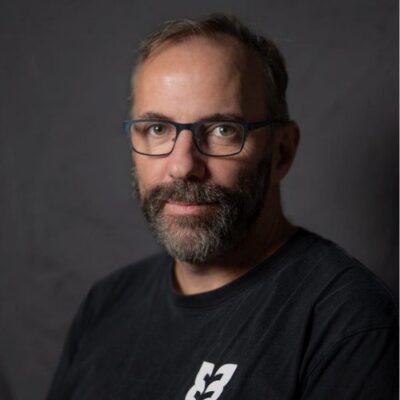
New Zealand’s Predator Free 2050 manager Brent Beaven explains what it takes to run a nationwide effort to eliminate invasive predators and protect native wildlife. He describes the scale of the challenge and the long‑term coordination across communities, scientists, and government. This is project leadership at its most challenging, where complexity, uncertainty, and long timelines collide.
Chapters
00:00 … Intro
01:28 … An Ecosystem at Risk
03:35 … Predator Free 2050
05:23 … Achievability
06:41 … Strategy and Implementation
07:59 … Community Mobilization
09:10 … Preparation for Acceleration
09:43 … The Phasing
10:55 … Aligning Stakeholders
13:38 … Preserving Continuity
15:52 … Encouraging Ownership
17:44 … Project Launch
18:32 … Stewart Island
19:24 … Small Wins
22:12 … Ren Love’s Projects from The Past
25:05 … The Influence of Landscape
27:23 … Personal Challenges
30:33 … Tools and Techniques
32:27 … Developmental Evaluation
35:58 … Using AI for Pest Control and Detection
39:33 … Ethical Considerations
41:44 … Lessons Learned
44:12 … Find Out More
44:47 … Closing
Intro
BRENT BEAVEN: I think as a program manager in complexity, you’re sitting there watching that beacon all the time. And if your funding changes, or you hit a barrier, or what you thought was going to work doesn’t work, or some political elements nudged you over to the right or the left or wherever, they’re just little adjustments on a long-term journey. Your job’s to navigate change towards an outcome, so be clear what your outcome is.
And then because of that, you need to build a system that is agile and responsive. So, you can change, and you’ve got mechanisms to change. …Don’t get locked into certainty or locked into a set way. The systems are there to support your efforts to navigate around barriers to get to where you need to go. And then, don’t rush.
WENDY GROUNDS: Welcome to Manage This, the podcast created by project managers for project managers. I’m Wendy Grounds, and with me in the studio is Bill Yates.
If the show has helped you think differently, work smarter, or feel a little less alone in the chaos, we would love to hear from you. You can find us on Velociteach.com, on social media, or in your favorite podcast app. And don’t forget you can earn free PMI PDUs just by listening. Stick around until the end of the show to learn how.
So, let’s get started and see what insights, ideas, and perspectives we can add to your project management toolbox today.
An Ecosystem at Risk
Imagine stepping into a New Zealand forest. The air is cool, leaves rustle, but not with the familiar sound of a kiwi moving through the undergrowth. Without the kiwi bird turning the soil, the forest floor feels strangely still. Insects that once depended on that gentle disturbance now multiply unchecked. Seeds that relied on the kiwi beaks to travel lie where they fell, altering the rhythm of the forest’s renewal. It’s a future that feels uncomfortably possible, and one that forces a sobering question. When a nation shapes its identity around a bird, what becomes of that identity when the bird is no longer there?
Today we’re asking, what does large-scale project management look like when the stakes are an entire ecosystem? Our guest is Brent Beaven, and he has spent more than 25 years leading environmental work across New Zealand from tracking kiwi to shaping national conservation strategy.
As the Department of Conservation’s manager for Predator Free 2050, Brent leads one of the most ambitious long-term programs in the world, bringing government, iwi, businesses, and communities together around a shared goal.
BILL YATES: With more than 25 million native birds lost each year, and thousands of species at risk, this is project leadership under real pressure. We’re talking complex systems, competing stakeholders, and zero room for complacency.
Many of New Zealand’s native land species have already disappeared, at least 60 bird species along with several frogs, plants, and countless invertebrates. Of the more than 9,000 species that have been assessed, over 3,000 are now threatened or at risk, with thousands more they still don’t know enough about. And every year predators kill more than 25 million native birds, underscoring just how urgent and high stakes this challenge has become.
WENDY GROUNDS: Hi, Brent. Welcome to Manage This. Thank you so much for joining us today.
BRENT BEAVEN: I am really looking forward to it, Wendy and Bill.
Predator Free 2050
WENDY GROUNDS: Yeah, we are excited about this conversation. We’ve done a little bit of homework about it, and I’ve been watching some videos. (PF2050) And I’m going to put links to those in the transcript for our audience so that they can get a little more acquainted with what you do. But can you give us an idea of Predator Free 2050? Now, it’s a huge ambitious conservation effort, and just describe for us the vision behind it and what made it feel that this was achievable?
BRENT BEAVEN: Yeah, I wouldn’t go so far as to say it’s achievable, but it’s certainly worth attempting, and I’ll try to describe that. So, Predator Free 2050 is a vision within New Zealand to try to eradicate a small group of invasive animals that have been introduced to our island nation and shouldn’t exist here and are just basically driving our native species to extinction.
If we don’t do something to manage these introduced animals, we’re going to lose our native species which are iconic and part of our identity and contribute to the world’s biodiversity. So, we want to keep them was the decision we made, so we’ve got to manage these things out. And for years we’ve been doing what we call “suppression” or “management” of these animals and keeping numbers low, but really, we’ve still had our native species declining.
So, we needed a game changer. And the game changer was a very bold vision to say actually we’re going to try to completely remove all of these invasive animals. It’s rats and feral cats and possums and what we call mustelids, which is stoats, ferrets, and weasels. We want to remove those completely from the country. So, it set the bar very high, and it’s created a huge challenge for us.
Achievability
Now that’s where I’ve had my first comment about achievability. It’s a real stretch, but it is way beyond our current capabilities. But it builds on 60 years of conservation history. We’re really good at eradications at a certain scale, and we’ve got really good at management at a very large scale on the mainland. So, it’s trying to sort of combine those two elements to get large scale on the eradication elements.
And I think what made it feel it’s worthwhile is when you work backwards, so if you have a really audacious goal, a real stretchy goal like the whole country by 2050. And then you step it back in sort of 10-year increments, when you look forward five to 10 years on what you have to have actually achieved, that looks achievable. So that’s well worth it.
And the other thing that makes it really worthwhile, when I was in on ground zero on this, so I, you know, helped with the design, when you think what failure looks like, it’s still a better state than we are currently. So even if we don’t reach it, we will have better methodologies. We will be protecting larger areas. We’ll have more biodiversity. Failure is still a success. So, in that case you go, well, this is a no-brainer. We just need to try this and push along.
Strategy and Implementation
WENDY GROUNDS: Yeah, you kind of have to do something. I agree. Eradication is very different to just population control. Can you talk to us about the plan that you are implementing and which are the predators that are the most damaging? Are you targeting those, or is it just all of them at once?
BRENT BEAVEN: Yeah, population control or what we call “suppression” is a bit like mowing your lawn. You know, you go around and you mow your lawn; but it will grow back, and you’ve got to go and mow it again. So, you’ve got continual investment. You’ve got to go again and again and again.
Eradication is like ripping your lawn up and putting concrete down. You know, you’ve changed the very nature of what’s happening. So, they’re not there anymore. We don’t have that issue around managing that population continually, and you’ve removed completely the pressure on our native species. They just thrive. So, you’ve got quite a different endgame.
But yeah, complete zero is quite a different step. Our eradication thinking across the country is being you spend about 10% of your effort on removing 90% of the individuals, and then you spend about 90% of your effort on removing the last 10% of individuals. And, that’s a bit of a rule of thumb that sticks. So, we’re trying to get those cost factors down quite a bit.
Community Mobilization
The plan is sort of multi-tiered because it’s so long, but we’re just bringing our new strategy out. And the new strategy has a community mobilization component to it, so it’s saying that we’ve got to get people engaged in this. And that’s part of the sustainability of this as much as anything. If we’ve got New Zealanders onboard, and they think this is a good investment, then our politicians will think it’s a good investment, and they’ll want to keep working on it. And as we work through areas, we want people to be excited about the potential of our biodiversity and what we’re doing. So, a big community mobilization component to it.
A chunk of work focused on maintaining what we’ve gained so we don’t go backwards on any of that. And some of that is focusing more on suppression. It’s that old analogy of keeping the patients alive while you build a new hospital.
So, we can’t walk away from looking after our native species. Then huge focus at the moment on innovation and research and learning. Because it’s that big gap between where we are at the moment and where we want to be, we’ve got a lot of focus around filling in our knowledge gaps and trialing and testing stuff and allowing failure, you know, as long as we learn. We’ve just got to unlock the ability to do these next steps after this.
Preparation for Acceleration
And then we’ve sort of got this last phase is about preparation for acceleration. So, we know that, if we can prove concept, have the plan in place, have everything lined up, and have a really good story on return on investment, benefits frameworks, what’s New Zealand buying when it does this? What’s the benefit it gets as a whole? Then we will have a really good case to get the funding required to roll this out across the country. And at that point we need to be prepared for that. So, we work through that stage, as well.
The Phasing
So that’s our focus here, and our strategy. But if I looked at the phasing of how we applied this, our first phase which we worked through over the first period was probably understanding what we needed to do to deliver this, and then getting the budget allocation to enable that. And so that was really broad, involving all the stakeholders we could think of.
But now that we’ve developed a roadmap to get us moving and what we need to do, it’s a bit more focused now on building the evidence and the business case, you know. So, filling those knowledge gaps, building the evidence that this is worthwhile, that we know what we’re doing, getting proof of concept in place. And then our third phase will be that rollout phase beyond that.
You also asked, sorry, you said what predator’s most damaging, but I don’t – where we’ve come to is it’s the cumulative impact of the predators which is the issue. Food webs are really complex. So, if you take one out, you often get a compensation on the others. And it’s the additive or cumulative effect of these that is actually eating our native species out from under us. We’ve got to manage all. So, we’ve gone for a multi-species eradication program that we’re trying.
Aligning Stakeholders
BILL YATES: Brent, one of the things that you’ve mentioned which is very relatable for our project managers is having a multitude of stakeholders and figuring out, okay, which ones is it really important that we get engaged and keep engaged in this project. So, I know for New Zealand, the Department of Conservation, they’re trying to coordinate 26 national entities toward this single long-term objective. Twenty-six entities, you know, if you think about that, that’s a bunch of stakeholder groups there that are all trying to collaborate on the project. So how do you align so many stakeholders toward a shared milestone?
BRENT BEAVEN: Yeah, I would like to make some throwaway comment around herding cats.
BILL YATES: Yes.
BRENT BEAVEN: It is a bit like that. I think that we have had a slight change on how we do that. When we started, it was really important we were inclusive. So, we mapped out all of the mandate elements. Now this comes to that adage of, you know, what’s the nature of the program you’re managing? Is it simple, is it complicated, or is it complex?
And when you get into complexity, our existing systems aren’t well established to manage those. We try to simplify all the time and bring things back to either being complicated or simple. And sometimes a complex problem needs quite a different approach. It almost needs a complex approach. And when you map the mandate out, even the Department of Conservation’s mandate was not broad enough to cover all of the actions and work that was required to deliver on this.
So, when we mapped out all of the elements that needed to do, that’s where we understood the breadth of interest groups that need to be brought in. And if someone else was interested at a national level, we brought them in, as well because, you know, why would you exclude people in that early phase of trying to map out the work you’ve done? Now that we’ve mapped out the first phases, we’re actually going to simplify that involvement a bit.
So not as many people are involved at this initial stage. Others will come in later, and that’s helped considerably. But we did have very large collaborative processes. We broke it into structures, you know, so we’d have one around landscape scale and eradication investment, one around policy and legislative frameworks and that. And that all the groups would bring together specialist sort of knowledges to map out the pathways.
So, they came out with the action plans required we needed. And then our role as the Department of Conservation or the lead agency was to consolidate all that together into a program of work. I think if there’s one lesson out of this, it would be make sure there is only one entity that’s in charge of strategy and coordination. You can’t have dual strategies running, so to make sure there is just one.
BILL YATES: Yeah, that’s good.
Preserving Continuity
WENDY GROUNDS: This is going to take decades to complete. So how do you make sure that the leadership and the funding and the accountability stay strong, even as inevitably people will change, governments change, and the leaders on this project will change? How do you keep that continuity?
BRENT BEAVEN: Yeah, it’s – it’s a challenge. It’s very hard to predict. It’s hard to predict what’s going to happen in 10 years’ time. And so, because I’m quite old, and I’ve done 30 years of conservation management now, and I did quite a lot of reflection on what made programs fail and why didn’t things, you know, why did they ramp up and then disappear?
And there’s several elements I sort of like to focus on. One is a level of that public and community engagement and support for something is actually really important because that sort of manages your political interface. Your politicians always respond to public sentiment. So, if something dies down and becomes business as usual, and disappears, and just sort of gets buried within stuff, and it drifts from view, you actually start to run quite a lot of risk of losing that long-term support.
So, you want those structures in place. You know, one is driving that community support, but also being really structured around your long-term work program. So, you know, having a publicly available strategy, having an action plan that deliberately steps through sort of a logic map type approach to things shows, if we do this action now, this is the change we expect to happen and the goals we expect to achieve. I think having all of that visible is really important.
And then, then you need to get some results. There’s nothing protects the program better than delivering results and then celebrating them. Like if you can show the change you’re making and why the investment is exciting and worth delivering, that just keeps that momentum going. So, you never want to get at business as usual.
And the other little elements I was thinking of in there is having non-government involvement because we’ve had NGOs, and we’ve got a specific trust that is sitting there and driving this. And they just keep that challenge in place and keep the visibility up and almost hold the government to account to some degree, which I think is really important.
Encouraging Ownership
And then my last factor in that would be, as you design the system around this, to make sure it doesn’t rely on one person. So, if you – if you get anchored around an individual, then you’ve got one point of system failure. So, it’s really important. You know, there’s a real tendency for people who create these sorts of programs to be very strong personalities. Myself probably included in there if I’m honest about it. And you’ve got to – you’ve got to hand it over and let other people take ownership. So, if you can spread that ownership much more broadly than just a single individual or a single entity…
BILL YATES: These are outstanding. I think about many of the listeners have projects or programs that go for quite a long time. Maybe not decades like this very ambitious program. But still, these are such great lessons. I encourage people to go back, you know, hit that rewind button and listen to those points that you brought out. Those are so good.
I think about some of the projects that I worked on and the great need because of the length of the project to keep people engaged and keep, you know, to celebrate wins. When we hit a milestone, there may be five milestones over the life of the project. If we hit the first one and the second one, we have to celebrate and keep reminding people we’ve had success on the first two. That’s awesome. Look at the third one that’s coming up. This is going to be great.
And also, what a great point about, you know, not only keeping it high visibility, but not depending on one person. It’s so important. Those are great points you brought out.
BRENT BEAVEN: Yeah. As a project manager, I am continuously testing, could I walk away from this project? Could I shift? And I shouldn’t be here forever. I’ve been about 10 years now, and I’ve already exceeded what I think is a healthy span for a project manager because everyone’s got their own limitations and, you know, you’re going to hit those over that sort of period.
So, it’s just saying, are the structures in place? Is everything there? Is there enough other ownership that I could step off, and this will continue on a good trajectory?
Project Launch
WENDY GROUNDS: One thing I don’t think we covered is when did this project begin? I don’t know if we’ve actually mentioned that, and you’ve been there from the start. Is that right?
BRENT BEAVEN: It was announced in 2016, and it sort of really got going in 2017 with the appointment of staff and first projects being funded. But it’s built on 60 years of history. You know, it’s island eradications community-based staff had pushed for many years. The whole time I was on Stewart Island, it was a push for taking all the pests off Stewart Island, which then moved into this. Could we do it across the whole country?
So, there was talk about it for six years before it was announced, you know, and it just built a momentum and almost built the perfect wave actually as to getting that level of support.
Stewart Island
BILL YATES: Let me make a quick note. Some people may not be as familiar with Stewart Island as Brent is. So, it’s just south of New Zealand. It’s a large island, what, maybe 20, 40 miles off of the coast. And you were living there for a number of years, more than a dozen years, and doing some of the work there.
BRENT BEAVEN: Yeah, and it’s about 170,000 hectares, and I have no idea what that is in acres.
BILL YATES: I think it’s like I was looking 25 by 45 miles. So, you know, for…
BRENT BEAVEN: Yeah, it’s about that size. It’s like a little microcosm of New Zealand, the very big wild places on it. So, I spent quite a lot of time there. Given the Predator Free sense now, that’s one of our test grounds and where we’re trying to see can we achieve eradication. If we can achieve eradication on Stewart Island, that’s the right sort of scale to say, “Oh yeah, we’ve got the scale.”
Small Wins
WENDY GROUNDS: We’ve got this; right. What have been some of the small wins that you’ve celebrated?
BRENT BEAVEN: I think with program managers, you always look to the next problem; don’t you? So that’s…
WENDY GROUNDS: You forget the good stuff.
BILL YATES: I don’t have time to celebrate. We’ve got work to do.
BRENT BEAVEN: You can get something solved and out of the way. And then, “What’s next? What’s next? What’s next? What do I have to fix here?” But we’ve had cross-government support. So, every party that’s come through has supported this. We’ve got a very healthy budget allocation to deliver on it. I think the shift into some of the science investment is really cool.
And we’ve managed to get our scale of eradication up about 110,000 hectares now. So, as a one-off project we’re starting to crack the scale. Got a really strong shift into defense. How do we defend sites? Because we can’t do the whole country in one go. We’re always going to have to hold the line somewhere. So, developing those.
Things I love and I find as really good wins is just that shift from new projects always have a lot of criticism, and people aren’t sure, and you get a lot of doubters. And everyone wants to point out all the problems. Been seeing that shift over time to now where this is more embraced. And it’s become an accepted project, and something people are proud of and driving towards and can see the benefits of. So that’s a sort of win I enjoy.
But yeah, lots of toys and stuff coming out. You know, new traps, new toxins. A couple of good teams focused on eradication now. So, we’re getting a lot of professionalism driven into that area.
So, if you want a small win, one of the ones that is quite personal to me that I’m quite proud of is I’m on the board of a little project called Capital Kiwi. And by achieving a predator-free environment around Wellington, we’ve been able to reintroduce the kiwi back around our capital city, around Wellington.
So, in the foothills, you know, that’s the wild areas beside Wellington. But people are encountering kiwi now on their mountain bikes, when they go mountain biking, they go running. They’re turning up in people’s backyards, you know, getting captured on trail cameras. There’s a golf course where people are going golfing and can encounter kiwi.
And so, we’ve got – we’ve got a population of over 250 birds now, breeding successfully and self-sustaining around Wellington. We lost the kiwi around the Wellington region over 150 years ago. So, you know, that’s just that complete absence to being able to get something that people really treasure and think is, you know, really sensitive and vulnerable back into a site like this.
And it’s that lovely interface of wildlife and wildlife areas not being remote preserves that people go and visit anymore, but the ability to fold where people live and our native wildlife back together into one location.
Ren Love’s Projects from The Past
REN LOVE: Ren Love here with a glimpse into Projects of the Past; where we take a look at historical projects through the modern lens.
Today’s feature is not so much a formal project as it is one of the most mysterious discoveries in human history: the Nazca lines and geoglyphs in Peru. If you’re anything like me, you’ve never heard the term ‘geoglyph’ before; essentially ‘geoglyphs’ are just large designs created on the ground by moving around rocks or dirt.
So, what makes these designs in the dirt so special? Well, there are hundreds of them and they are huge. The Nazca Lines include over 800 straight lines, 300 geometric shapes, and around 70 biomorphic figures, depicting animals, plants, and humanoid forms. Some figures stretch over 1,200 feet long. This also means that you can only fully view them from above – a strange feature given that they are estimated to have been created between 200 BCE and 600 CE.
As with many impressive ancient structures, there have long been people who believed that the Nazca lines were created by ‘ancient astronauts’ aka aliens – which their primary claim being that ancient peoples couldn’t possibly have created such accurate lines and shapes. In 1983, paranormal researcher Joe Nickell debunked this belief when he reproduced the figures using tools and techniques that would have been available at the time; things like ropes, wooden stakes, and basic surveying methods to maintain straight lines.
The Nazca lines were created by removing dark, iron-oxide-coated stones from the desert surface to reveal a lighter soil underneath — a simple technique that produced enormous, high-contrast designs. Researchers believe that they were built incrementally over several centuries.
Though we know quite a bit about the physicality of Nazca lines, a big question still remains: why? There are lots of theories: from replicating constellations, to religious purposes, to irrigation maps, and even one researcher suggested, they were used for the development of textiles.
So why feature this project? Because it demonstrates the value of planning and execution. The Nazca lines were never meant to be seen from the ground. Their full impact is only visible from the sky, something that the Nazca themselves couldn’t even do. Additionally, the lines have survived over 1,500 years, resisted erosion thanks to the desert climate, and they continue to generate global fascination, tourism, and study.
Thank you for joining me for Projects of the Past, I’m Ren Love. See ya next time!
The Influence of Landscape
WENDY GROUNDS: How does the topography and the environmental constraints in New Zealand, how do they shape your technical and your operational approach? And if you have any examples of where the landscape has influenced how your work was done.
BRENT BEAVEN: Yeah, it’s a constraints as opposed to opportunity through our landscape, I think. So as an island nation, which is really useful. So, we do have strong topography. The Southern Alps is a mountain range, some really fast-flowing rivers, things like that have really helped. They create some boundaries, which are quite useful. So, our predator species can’t go everywhere. Even our farmland creates a boundary to some extent because it is a very intensive farmland and puts very defined corridors of movement for these animals within them.
What it’s enabled is things like we’ve got a big project going in South Westland. We’re getting delivered by an innovative little company called Zero Invasive Predators. And they’re trying to prove at concept that we can do really large areas and defend them.
So, this is where I was talking about a 110,000 hectares being managed, multi-species, complete removal. The reason I’ve chosen that South Westland environment is it’s bounded on one side by the ocean, the other side by the Southern Alps, which those predator species can’t cross over. And it’s got two very fast-flowing glacial rivers down either side of that area. So, they can use the fast-flowing rivers to slow reinvasion down. Doesn’t stop at it, but it allows it to be manageable. So, we can use our topographic features to create advantage on where we choose and where we look after and where we prove concepts.
BILL YATES: That’s really good. I was listening to an interview that you had, and I was laughing, thinking, okay, this man has to think about how far a rat can swim or what temperatures a possum can survive in. It’s so different. So, thinking about these constraints and these boundaries and how they’re useful and helpful for your project, I get it. Yeah, it makes sense.
BRENT BEAVEN: Yeah, thankfully, I don’t have to understand that. But the people we’re contracting and the people who are coordinating that, it does help. I mean, I do have a science background and an operational background, so that that experience is useful. But yeah, don’t try to own everything.
Personal Challenges
WENDY GROUNDS: Yeah. What’s been, for you personally, one of the biggest challenges on this project?
BRENT BEAVEN: I think it’s slowing down to bring people along would be my biggest challenge. So, I’m focused on this full time, and you’re looking way ahead, and you can see the actions that need to happen. But then you’re asking a lot of people to keep up with that, if that makes sense. So, you know, and I feel a sense of urgency because I have spent 30 years watching the loss of our biodiversity.
You get this sense of urgency there, and this passion, and then you go, well, “Yeah, we need to do this, we need to do this, we need to do this.” But everyone else has got their normal constraints and all their, you know, normal business to deal with and everything else going on. So, you’ve got to sort of stop yourself and come back and bring people back along on the journey to get to where you need them to be. That’s been my biggest challenge is to curb my frustration and keep working back to bring people along.
BILL YATES: Again, you are preaching. This is such good stuff, Brent. This is a concept, I wouldn’t say for beginner project managers. They’re not there yet. They haven’t really faced that. But for those who get more advanced in their career, this is something that I’ve certainly struggled with, and I know others do too, which is, you know, it’s like maybe I’ve been the one meeting face to face with the customer, or I’ve seen the impact.
Like in your case, you’ve seen the impact of this project not being completed, and you feel urgency and passion about it. And the same thing, there are times when as a leader of a team and stakeholders, we have to stop and go, “Okay, I’ve experienced things, or I’ve seen things maybe at a deeper or more developed level than other team members.” They don’t quite get it yet.
So how can I communicate this better? How can I communicate it better to other stakeholders? Maybe it’s the contractors, the business partners that I have. They see their little piece and what they need to do, the specification that they have to do. But I want them to see the big picture because then I think then they’ll embrace it, and they’ll be even more innovative with their solutions.
And yet the same thing I struggle against, push, you know, push, push, push. Why don’t you guys get it? You know, I can see this so clearly, such good advice to all of us to remember to slow down. I probably have a deeper, richer perspective than others just because the position I’m in, the visibility that I’ve had. So, I need to remember that and think about that with my team and my business partners. It’s great advice.
BRENT BEAVEN: Yeah, it’s a really good summary, Bill. But I always think intuition is just experience coming through. You know, you’re experienced, you’re just seeing things, and you don’t always know why. But it’s just, if you stopped and slowed down, you would actually connect the dots and see why you think you need to get to the spot.
But that’s just reversing back a little bit and bringing people along on a journey becomes really important.
Especially when you think about if you’ve got senior leaders or chief executives who have a hundred thousand demands on their time. How you engage them and get them to where you are, and what you need when you’ve got a much more focused area of work. It’s a big challenge. And I call it a personal challenge because I’m not designed for it.
BILL YATES: Yeah, many of us are right there with you.
Tools and Techniques
WENDY GROUNDS: I’m sure some of our listeners want to know a little bit about your tools and techniques that you’re using to tackle this, the type of science and innovation that you are using in this project. Are you able to tell us about that?
BRENT BEAVEN: Yeah, yeah, yeah. It depends on the environment, which is really interesting. So, we’ve broken our environments into sort of what we call rural, so farmland areas; urban environments; and more natural backcountry environments. And they’re all in sort of different phases and different learnings.
So, backcountry stuff, still using toxins substantively. We’re putting quite a lot of development, not in the tool, but the application of the tool. That’s where we’re going. I’m very, very big scale trying to break that scale factor. In urban environments, we can’t take the aerial application of toxins over broad areas, say. And the same in farmland where you’ve got that. So much more development of multi-kill traps, long-life lures, artificial intelligence coming strongly into the fore in this space. And so quite a lot of investment in that.
And then the integration of all that data, believe it or not, you start thinking about things like data and interoperability and how we link things together become very, very important. So still generally, a lot of the old techniques getting used. We’re just refining traps. We’re refining toxins. But AI is a big game changer. Genetics holds quite a lot of potential, as well. We’re also got that investment in genetics.
But, you know, most of these investments and this change in technology is to reduce cost. Because we can achieve eradication at certain scales as long as we put enough money into it. So, it’s really saying, we know we can do this. Now, how do we get it so it’s cost effective and scalable? And then that’s where technology really starts to come in and refine those elements. So that’s an interesting one.
Developmental Evaluation
And I mean, that’s in how we do stuff on the ground. And we can talk a little bit more soon about how AI applies through detection and things like that. But in a program management sort of sense, one of the things we skipped over a little bit, but I want to cycle back on, is one of the tools we use is a little thing called “developmental evaluation.” And that’s, it creates this learning by doing approach, becomes really, really important in what we’re doing because it’s how we handle the ambiguity of our program. So, we don’t know how we’re going to manage this.
The program management approach gives you amazingly good structure. And it gives you all the stuff you need to have the right conversations to see how you’re going, where you’re going, how things are tracking, and when you bring things together. But the worst thing to do in an area where you don’t know what the outcome’s going to be is to set KPIs. We do not set key performance indicators because all you’re going to end up doing is locking yourself in. So, we use a developmental evaluation framework, which means you try to set learning indicators or marker points where you check what you’ve learned.
And it’s very simple. Basically, what you do is you invest in something, you make sure you’ve invested in the learning from whatever you’ve done, and then you have a system that enables you to apply that learning to your next steps. We have a 50-year vision, but we really focus on the next five years so we can make adjustments rapidly. If our learning told us we had to turn around and go backwards or the other direction from where we were, that is the right thing to do in our environment. You know, so if you’re locked into a KPI, you would keep going to achieve that, or you would have a sense of failure. Our failure is not to listen to what we’ve learned.
BILL YATES: Yeah, that completely makes sense, Brent. The feedback loop is so important at this stage in the program. And there are many times when, as project leaders, if we start saying, “Okay, these metrics are important,” and we start reporting them, then people expect them. To your point, we need to remain flexible. Don’t put the cart before the horse. Don’t make the data or the KPI the most important thing because we’re not even sure we’re measuring the right thing yet. Let’s continue that feedback loop to make sure that we’re learning as we go.
BRENT BEAVEN: I mean, a little example of that in our sense was there’s high pressure when you start a project up, especially when it’s political, to start showing results. So, we started gathering data on hectares treated. And it started to drive investment behavior around just getting hectares treated. And in some sense, that’s good, but we weren’t learning. It was just whatever it took to achieve those hectares as opposed to, “Are we testing something here? Are we narrowing this down to get this right?”
So, the focus went away from learning and experimentation and development of tools to just achieving the outcome. It’s just subtle little things like that. So, what you measure often drives action and being really mindful of that.
BILL YATES: Yeah, there was the large bank, I’m not going to say the name, but based out of the United States of America that got in trouble not too long ago for placing emphasis on the wrong KPI, you know, opening accounts. Managers were being rewarded to open accounts, so let’s go open those accounts.
BRENT BEAVEN: Yeah.
BILL YATES: And we saw what happened. So yeah, you don’t want to focus on the wrong metric.
BRENT BEAVEN: No. You don’t want to have no metrics, so that’s a bit of a balance.
BILL YATES: Yeah.
Using AI for Pest Control and Detection
WENDY GROUNDS: Won’t you tell us about AI? You mentioned it earlier, how that’s been used in your pest control and detection.
BRENT BEAVEN: Yeah, I think AI, as much as it worries me, it also – it offers so much potential. So, where we’ve managed to get to already with artificial intelligence is in our monitoring program. We’ve developed thermal cameras. A lot of people will be familiar with trail cameras or game cameras that you can put out and help detect motion and take a picture.
So, a slight adaption on that is what we call “thermal camera”. It measures, identifies body heat of an individual when it comes into view. And then by incorporating AI into that, it’ll take that body heat signature, and it will identify what it is on site at location. And that means your data packages are much smaller.
This becomes really important in our areas because we’re really remote. You don’t have cell phone coverage or, you know, we’re sending data out via satellite to enable a rapid response at a location. And so, you want to get your data sequences as small as possible. But that artificial intelligence ability to identify the animal immediately also gives you an immediate response.
So, you know your footprint you’re trying to deal with or the location is much, much tighter than before. That’s given us a much better response program. And we’re starting to see that we’re able to apply that to offshore islands that are prone for re-invasion, as well, just enabling rapid response, which is reducing costs across time. But we’ve also then taken that sort of technology and integrating into traps.
So, we’ve now got a couple of traps that are coming out that will only go off on the species you’re targeting. Critter Solutions have developed one that we’re testing at the moment where there’s lots of non-targets, you know, native species that we don’t want damaged. And the general idea is it just sits there. If a native parrot or a kiwi or a tuatara or something of that entered the trap area, nothing happens. Whereas if a stoat or a rat or something we’re targeting enters, that detects it a fraction of a second and identifies what it is and then goes off on that animal.
But then it opens up a whole raft of potential solutions as we start to integrate those things around the ability to have immediate responses. So, we could have a whole lot of bait stations or traps or things in play with your thermal camera, and you know, if you identify an animal in an area, it opens up a network of devices around the place. So, you don’t even have to have the human element starting to come into play. There’s lots of opportunity with artificial intelligence.
And it’s also given us a lot of cost savings in our more traditional camera sense in that you get a lot of images. How do you identify those images? So, we can use AI to classify the images now and detect the animals we’re looking for. It takes, instead of spending hundreds of hours going through data and images, it’ll all be done in an hour or two by artificial intelligence going through stuff.
And then we’ll be at the same application and acoustic recorders, our monitoring of response in our native species. We put the recorders out that just record what – the bird song and things like that. And then we can use artificial intelligence to classify all that instead of having to put people out into the field. Not that we want to remove people from the field, but we can redirect them into more useful pieces of work.
WENDY GROUNDS: That’s amazing.
BILL YATES: That is.
Ethical Considerations
WENDY GROUNDS: So much you can do. Some of the tools that you’re exploring, toxins and maybe some of the genetic approaches, it could raise some tricky ethical issues. Have you had any pushback on that? Have communities fully engaged with what you’re doing?
BRENT BEAVEN: Yeah, there’s the aerial toxins within New Zealand certainly do wind up sections of the community. Genetics is a hot topic within New Zealand in general because we’ve got GE laws, you know, that prevent genetic engineering within New Zealand. So, it’s – they are touchy subjects, but we are ratters. We’ve got very, very strong public support for the outcome, not the removal of predators, but the outcome beyond that. Our thriving wildlife, having our Kiwi background, our capital city again, you know, being able to interact with these things we think are really special, strong public support for that.
And at the moment, I suppose we’re in that Goldilocks phase where we’re just trialing, you know, we’re not committed to any of these. So, it’s quite okay to say, well, we’ll do some investment here in a lab and see how that plays out and see whether it’s real or not. We will trial this over here to see how it plays out with this community. But yeah, when we get to the idea of rolling this out at a much broader scale, there will be those elements. We’re just going to have our eyes wide open, you know, and we’re dealing with a population. So, there’s always going to be – there’s always going to be a portion of that population that will disagree with what you’re thinking.
I think when I was going to be managing these projects before, I liked to ask the question of, well, what proportion opposition do you think is acceptable? What proportion would you say stops you doing something? You know, and then if it’s a democracy, if you’ve got 50% support, theoretically you can carry on and do things. But, you know, conservation is a bit different from that. Is it 90% support? You know, do you let 10% of people stop 90% of people doing what they want, or is it tighter than that? And I think just trying to think some of those issues through beforehand is quite useful.
Lessons Learned
BILL YATES: Brent, for project managers that are leading complex, highly uncertain initiatives, reflect on your experience and share with us lessons that you’ve learned from the Predator Free 2050 that might help us in some of our projects.
BRENT BEAVEN: One is I would take the time to understand complexity theory. Complexity is different, too complicated, and it’s different, too simple. And the response is you have to have the right response for what you’re dealing with. You know, ecological systems and social systems are inherently complex regardless. You’re probably, if you’re dealing with those systems, you’re probably in complexity. So, you would be well advised to understand it.
But I think to manage that effectively is a clear long-term goal that seems very, very challenging, but is far enough away. Acts like a beacon, so it doesn’t really matter what happens. As long as you can always see that beacon on the horizon, you can navigate to it. And so that helps you deal with change.
I think as a program manager in complexity, you’re sitting there watching that beacon all the time. And if your funding changes, or you hit a barrier, or what you thought was going to work doesn’t work, or some political elements nudged you over to the right or the left or wherever, they’re just little adjustments on a long-term journey. So, your job’s to navigate change towards an outcome, so be clear what your outcome is.
And then because of that, you need to build a system that is agile and responsive. So, you can change, and you’ve got mechanisms to change. Don’t get locked. Don’t get locked into certainty or locked into a set way. The systems are there to support your efforts to navigate around barriers to get to where you need to go. And then – and don’t rush. Don’t rush because there’s a lot of pressure to rush. Don’t rush. You’ve got time.
BILL YATES: Yeah, yeah. Such great advice. I love the idea of that beacon, that goal, the, “All right, these are the benefits of our program, the project that we’re pursuing.” Man, I’m having a bad day; or, man, I’m having a bad month. We’ve had some big setbacks. Let’s focus on the beacon. Let’s focus on the benefits of this project. And this is a marathon; it’s not a sprint. So, let’s just keep focused on that and celebrate those small wins when they happen. Yeah, great advice.
Find Out More
WENDY GROUNDS: I know our audience is going to want to find out more and hear more about this project. So where can they go to find out more information?
BRENT BEAVEN: The best spot’s our website, www.doc.govt.nz, the Department of Conservation’s website. And if you get on the homepage, there’s a little tab there that says PF2050, so Predator Free 2050.
WENDY GROUNDS: I will put links to the website in the transcript so that any of our audience who wants to can just go and click on there and get in touch.
BILL YATES: This has been fantastic, Brent. Thank you so much.
BRENT BEAVEN: Thank you. Very easy conversation.
Closing
WENDY GROUNDS: That’s a wrap for today on Manage This. Thanks for hanging out with us. Don’t forget you can visit Velociteach.com anytime to subscribe, catch up on past episodes, or read the full transcript of today’s show. And the best part? You’ve just earned free PDUs for listening. Head over to Velociteach.com, click Manage This Podcast at the top, hit Claim PDUs, and follow the simple steps.
We’ll be back soon with more stories, tips, and strategies to help you level up your project management game. Until then, keep your projects moving, stay curious, stay inspired, and keep tuning in to Manage This.





Leave a Reply