

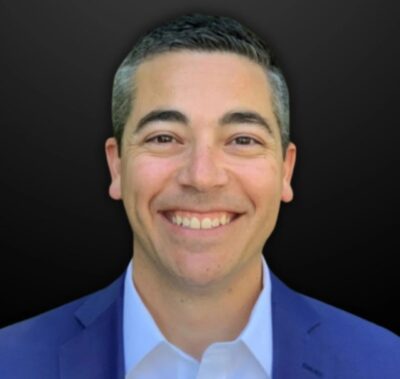
Following an earlier conversation about monitoring space debris, we now turn to protecting spacecraft from the debris. Trevor Smith shares about advanced composite materials designed to protect satellites and astronauts from hypervelocity impacts. He discusses building for impact with rapid prototyping, phased project delivery, and team culture in innovation. We also learn about space-based data centers and Atomic-6’s Light Wing™ deployable space structure platform.
Chapters
00:00 … Intro
01:09 … Orbital Debris Problem
02:33 … Trevor’s Story
03:33 … Early Whipple Shields
05:12 … The Threat of Space Debris
07:23 … What the Debris Consists Of
08:19 … Trevor’s Management Background
09:43 … Planning Milestones
11:51 … Importance of Smaller Milestones
13:21 … Facing Failures, or Not
14:31 … Product Testing
17:18 … Unexpected Testing Results
18:43 … From Concept to Flight-Ready
19:59 … Team Culture
22:48 … Dealing with Stakeholder Skepticism
23:55 … Velociteach
24:37 … Data Centers in Space
26:12 … Power and Thermal Management
29:42 … The Cost of Data Centers in Space
32:01 … Staying Focused in Innovation
34:47 … Find Out More
36:08 … Closing
Intro
WENDY GROUNDS: Welcome to Manage This, the podcast by project managers for project managers. We’re so glad you’re with us. I am Wendy Grounds, and in the studio with me is Bill Yates. Manage This is brought to you by Velociteach, and we truly appreciate this community.
If you’re enjoying the show, we’d love to hear from you, whether it’s through our website at Velociteach.com, on social media, or wherever you listen to your podcast. Your feedback helps shape the conversations we have and the topics we explore.
So today we’re talking to Trevor Smith. He’s a lifelong entrepreneur and two times founder with more than a decade of sales and business development experience in the technology and innovation sectors.
His leadership at Atomic-6 has been instrumental in developing the company’s proprietary composite manufacturing process. He previously co-founded Sprout Lighting, and served as vice president of CRESA Atlanta. He’s a skilled strategist and connector, and he continues to push boundaries of what’s possible in advanced materials and aerospace composites.
Orbital Debris Problem
Now in Episode 75, we talked about the growing challenge of orbital debris with Dr. Heather Cowardin, and she’s working to track and predict the movement of objects that are hurtling around Earth at incredible speeds. And that conversation opened our eyes to just how crowded Low Earth Orbit has become, and how even a paint chip-sized fragment can threaten billion-dollar missions. So, if you listened to that episode, and you found yourself thinking, okay, we know the debris is a problem, now what do we do about it, today we’re talking about the next logical step in that story.
BILL YATES: Yes, yes, yes. Tracking debris is one side of the equation. Protecting spacecraft from the debris that we can’t track is the other. That’s where our guest, Trevor Smith of Atomic-6, comes in. His team is developing advanced composite materials designed to shield satellites and astronauts from hypervelocity impacts – essentially giving spacecraft a kind of bulletproof suit for orbit. So, think of Kevlar for satellites.
This interview shifts the focus from awareness to action. Instead of just understanding the problem, we’re diving into how innovative engineering and bold project leadership are creating real solutions for one of the most urgent challenges in space operations.
WENDY GROUNDS: H, Trevor. Welcome to Manage This. Thank you for joining us today.
TREVOR SMITH: Happy to be here.
Trevor’s Story
WENDY GROUNDS: Yeah, so we’re excited to get back into this topic. It was quite a long time ago, 2019, that we spoke with Dr. Heather Cowardin from NASA, and she talked about the orbital space debris that they were tracking. And now you’re looking at this from another perspective. Can you tell us what first drew you to this challenge of protecting space vehicles from orbital space debris, and how you pursued this innovative solution?
TREVOR SMITH: Sure. So, we’re a startup at Atomic-6. We focus on advanced composites. And we had had a few meetings with the United States Space Force, specifically Space Systems Command out of LA Air Force Base. And so, if you’re familiar with the SBIR program, it’s a Small Business Innovation Research. It’s a way that the now Department of War (DOD) invests in new technologies. There was a what’s called a Direct to Phase II announcement for new type of debris shielding from Space Systems Command.
Early Whipple Shields
So, a little bit of background context. Heather probably talked about this, but Fred Whipple designed the early Whipple shields in the late 1940s. And that’s kind of how we protect the International Space Station today. There’s some additional composite that’s been put into those Whipple shields; but, for the most part, it hasn’t really changed in, like, 60 years.
BILL YATES: What is the technology? Is it basically just a series of layers? Like if you make it through this wall, it’ll slow it down, and then make this one.
TREVOR SMITH: Correct. It’s like a series of metal plates that are gapped about an inch and a half, two inches. And so, a projectile hits that first plate, kind of breaks apart; hits the second plate, breaks apart more; hits the third plate, breaks apart even more; and, you know, continue on until hopefully you’ve stopped all the fragmentation before it hits, like, the International Space Station. That works, but there are better ways, I think, to do that.
And so, to answer your question, the Space Systems Command put out this Direct to Phase II. Direct to Phase II means you didn’t have to do a Phase I. You go Direct to a Phase II, which is a bit more money. It was about a $1.2 million contract, development contract. So, we put in a proposal and said, “Hey, we’re a composite company, and we’ve got some ideas.” Actually, there was no historical background in what’s called MMOD, Micrometeorite and Orbital Debris.
So, we did a lot of reading, and submitted this proposal, and we got it. We got awarded the contract, and that’s kind of how it got started. Wasn’t out of the kindness of my heart. It was like, well, if Space Force wants it, and they’re willing to pay me a million dollars for it, yeah, we’ll see if we can tackle this problem.
The Threat of Space Debris
BILL YATES: That’s awesome. Let’s step back for a second. Talk about how much there is and the speed and the size of the debris that we’re talking about protecting.
TREVOR SMITH: So, as you go farther out from the Earth, debris moves slower. Have you seen the, like the coin, that you drop a coin in a funnel, and as it circles around, and it gets faster and faster and faster and faster until it finally drops? That’s kind of how debris works. And it’s just gravity in general. As debris gets closer to Earth, it gets faster. So, we call it LEO, Low Earth Orbit.
That orbital velocity, that speed of that, you know, dime spinning around is around 7.5 kilometers per second. So, Mach 21, or 17,000 miles an hour. As you get out to MEO, Middle Earth Orbit, or GEO, Geosynchronous, it gets a little slower. So, the fastest would be LEO. And actually, there’s one closer called VLEO, Very Low Earth Orbit. But most of the satellites you see are in LEO. So that is really what we plan for.
We have to stop projectiles moving at that Mach 21 speed. To give you a reference point, we’re here in Atlanta. At that speed, you could be at LAX in about five minutes. You could cross the entire continent in about five minutes. So yeah, it’s pretty fast. And then the tracking or not tracking, there’s untrackable debris, which basically is three millimeters or less. That constitutes a little over 90% of all debris in LEO, which means we actually can’t see over 90% of the debris that’s flying around in LEO, which is kind of scary.
I never thought until I met a few astronauts and ones on my advisory board that spacewalks were that dangerous. Commander Chris Hatfield is on our advisory board, first Canadian commander of the ISS. And I said, Chris, how often is, like, debris hitting the ISS? He said, “It sounds like rain on a tin roof.” Which is nuts. Like I did not expect that response.
So, you could imagine doing a spacewalk. You have some protection. It’s antiquated in my opinion. Very similar to Whipple shields. So, we’re actually working on astronaut suit applications for Space Armor, as well. But yeah, it’s super dangerous to be out there with, you know, you can’t see it, it’s coming at you at Mach 21. You never know.
What the Debris Consists Of
BILL YATES: And most of this is trash that we’ve created with all the satellites that we’ve put up there.
TREVOR SMITH: It’s a good mix. I don’t know “most,” but like you look at the moon, it’s got craters all over the place; right? Like there’s tiny pieces of rock and debris flying around space all the time. You look at Saturn. I actually spoke to Don Kessler. I don’t know if Heather brought this up, but the guy who said, hey, it’s this snowballing effect of, like, one satellite hits another, creating thousands of debris. That thousand debris creates more debris, and it just continues.
So, I spoke to Don Kessler a few months back. But Saturn, he actually used it as an example. He’s like Saturn with the rings. That’s just orbital debris; right? It’s just a bunch of rocks flying around the planet. So hopefully Earth doesn’t accumulate some rings like Saturn. Maybe with Elon’s million satellite orbital data centers coming online, we’ll just see this big ring of satellites, but obviously there’s some manmade stuff. But there’s definitely some natural debris flying around, as well.
BILL YATES: So, we have a clear definition of the problem that needs to be solved.
Trevor’s Management Background
WENDY GROUNDS: Yeah. Just talking about you personally, your management background. Now you’re looking at a project – something that’s not been built before, trying to fix a problem that needs fixing. How did you come into this? Like, what management skills have been really useful to you from your background?
TREVOR SMITH: I got a degree in commercial real estate and was a real estate broker for six years before getting into this. So, I didn’t have to manage that many people other than clients. But I think, you know, one of my skill sets is incentive alignment. So, identifying what incentives all the parties have in a program. What are your incentives? Are they cost? Are they time? Are they – insert any variable you want. Like, oh, I’m just trying to please my boss by getting this done.
So, understanding incentive alignment really helps, you know, figure out where your North Star is for any program. Like, wait, what does your customer want to accomplish? What does your company want to accomplish?
So, I think that’s probably the best skill set I transitioned over from real estate into running a space and defense company is incentive alignment. It’s a pretty magical thing when you can sit down, and you actually understand what the customer wants, what you want, and any other party involved. You can get things done a lot quicker once you understand where the incentives are.
WENDY GROUNDS: And surrounding yourself with the right people.
TREVOR SMITH: There’s that, too, yes. I have a world-class Chief Operating Officer.
Planning Milestones
WENDY GROUNDS: Now you’re building something that’s not been built before. Was there a plan coming into this, or did it just kind of snowball?
TREVOR SMITH: So, in the proposal that we submitted, it’s done in what’s called “milestones.” And you have – you want to write these milestones in such that, if you get hung up on a milestone, you’re able to continue to the next milestones, if for some reason. Right? So as an example, it’s a great, like, pro move, if you will, when you’re putting in these SBIR programs, instead of milestones being, I’m going to build a coffee cup, and I’m going to give you a coffee cup. Right? The milestone is actually I’m going to give you a plan to build a coffee cup, and then I’m going to write a report on it.
I’m going to deliver the report. So, my deliverable is a report. Did it work? Did it not work? And if it didn’t work, what do we do next? So, it allows you to move through those milestones without, like, putting risk on the contract of, like, oh, I made the coffee cup wrong, so we’re stuck. But you word the contract and such that, if you do get stuck, you have the ambiguity to check with the customer and change some things to get through the next milestone.
So, to answer your question, when you’re building a debris shield that’s never been built before, you anticipate hitting some of those, you know, roadblocks. Ironically, we actually sent our material plan, what we’re going to make the shield out of, to NASA.
And just to give you a reference point, this is so hard to run a finite element analysis, modeling, and simulation on because the physics are crazy. So, with metal, it’s much easier to do because it’s a much more understood material. But with composites, there are so many variables in it. Fiber orientations in one way, the resin mixture, and all sorts of things.
And, we gave them our plan, and they said, “That’s not going to work.” So, I well, let’s shoot it anyway and see what happens. Maybe it’ll help inform. But it actually worked the first time. The very first shield worked. And so, they called us back and said, “Could you help us with our modeling and SIM?” We’re like, yeah, absolutely. Because it’s a very, very hard physics problem to model out computationally. Some things you’ve just got to go brute force and go try it. This is one of those things.
Importance of Smaller Milestones
BILL YATES: You made such a good point, Trevor, that I think our listeners, our project managers need to hear that again. The piece about the more ambiguity, the greater the need is to break this into phases and to have proof of concept, to have a prototype, to break down that deliverable. So that, if I’m the customer, I see it as less risk.
I say, okay, Trevor and his team are going to put a prototype in my hands. First, even before I pay for that, they’re going to tell me how they’re going to build that prototype, and they’ll tell me the spec they’re shooting for. So, then I can put that in front of my science team, and they can look at it and kick around and have some back and forth with them.
You know, the more we can break something down into smaller and smaller milestones and phases, then the more it reduces risk. And then it makes both parties feel like, okay, this is something achievable. This is risks that I can accept. You know, I’m not biting off the whole, the total budget for this project. I’m just doing piece by piece and making sure that we’re passing those gates and getting to where we want to go.
TREVOR SMITH: Yeah. I think a customer, if you present them with a plan to go build something kind of audacious, and you don’t share with them, well, if this goes wrong, here’s our backup. If this goes wrong, we’re going to try this out, yada, yada. You come across as, one, unprepared; right? And two, even more risky; right? Because you haven’t outlaid concerns for what happens if it doesn’t work.
BILL YATES: That’s right.
TREVOR SMITH: Right? So, yeah.
BILL YATES: Mm-hmm. That’s a great approach, yeah.
Facing Failures, or Not
WENDY GROUNDS: Yeah. In innovation though, failure can be part of the process. You know, you try something, and it fails, and it doesn’t work. How do you just create that safety in your team? Like, if we do fail, what was the way that you faced those failures?
TREVOR SMITH: Well, ironically, we haven’t had a failure. Oh, at least with Space Armor. We haven’t had any failures yet. We haven’t shot it with a big enough bullet yet. There’ve been many other things that have failed; but ironically, Space Armor hasn’t failed.
Well, I mean, there are certain aspects of it. So, like maybe we were using a specific resin, which is like the glue, and that resin didn’t have the spectrum of temperature that we needed. And so then, well, great. We tested it, they shot it, that worked. But it’s not going to work at plus 120 C to minus 180 C temperature; right? Okay. Well, what other resin systems have those same ballistic properties that have greater thermal properties? So, lining up multiple options for fiber, lining up multiple options for resin system.
So, you had to go test it out, brute force. But yeah, it’s coming up with that plan of like, here’s my backup, here’s my backup to my backup, exponentially in this case. Yeah.
Product Testing
BILL YATES: Trevor’s in the room with us, and he brought some of their product. And so, their team is trying to find the right combination of weight and strength properties to protect these space assets. So, at the end of the day, you’ve got to put something in a room and figure out how to shoot something really, really, really fast at it. And I was just looking at some of the speeds. It’s like a typical rifle is 10 times slower than the space debris. So, when you’re showing us these bullet holes, I’m like, where did you find a rifle, so you can get the right speed, so you can even test something to see if your specs are sufficient or not?
TREVOR SMITH: There are a few facilities in the country that have, it’s called a “hypervelocity test lab” or a “two-stage light gas gun.” So, the way it works, the barrels are pretty long, some of them like 200 feet. But you’ll start out with a larger diameter barrel, and they pack with gunpowder and gas and light, and they kick off an explosion. And then they compress all of that gas into a smaller barrel. And then that smaller barrel gets compressed into potentially a third.
And at the very end, all that pressure releases on basically the size of a BB. And then you have a, what’s called a sabot, which is supporting the projectile or the aluminum ball in this case, so all the force doesn’t rip the ball apart.
So, you’re getting force pushed onto the sabot. And then you have the projectile being, you know, thrust forward from the pressure on the sabot. And then you have to actually hit a bulls-eye within a bulls-eye to make this happen right. You have to split the sabot from the projectile. So, they shoot it through a metal ring that is large enough for the projectile to go through, but small enough to capture the sabot which is around it. They have to hit a bulls-eye midair before they actually hit the target. So, you want to separate the sabot from the projectile. And all this is happening so fast.
If you go to our website, there’s a video of it. But the camera, it’s not even super smooth, but it’s shooting a million frames per second. And even then, it’s still, like, not really smooth because it’s so fast. But yeah, it goes zero to Mach 21 in 16 feet, overcoming about 1.3 million G forces. Yeah, super-fast.
But to answer your question, we’ve done testing at University of Dayton Research in Ohio. Most of our testing has been at Texas A&M and College Station. And ironically, they point that gun at Texas University.
BILL YATES: Of course they do.
TREVOR SMITH: Like if you looked at an aerial view, they have the gun pointed at…
BILL YATES: Yeah, it’s nothing better in state rivalries. That’s awesome. I just wanted some of our project managers to hear the complexity with this thing. You know, some of the projects I’ve worked on, we had to solve some problems for slow computer servers, that kind of thing. Never anything like this.
Unexpected Testing Results
WENDY GROUNDS: Yeah, do you have any examples of when testing revealed some unexpected results? Good or bad, doesn’t have to be…
TREVOR SMITH: Oh, sure. We actually had a very good one, totally unanticipated. So, if you look at the video on our website, we actually have a side-by-side shot. On the left side, you’ll see Space Armor. On the right side, you’ll see a monolithic block of aluminum, just a solid block of aluminum. They’re both getting hit with the same projectile at the same speed.
When Space Armor gets hit, you see gas and particulate sort of shot out after the impact. When the aluminum block gets hit, you see hundreds of pieces of aluminum get projected out post impact. Like more mass is let off of that monolithic block of aluminum than mass that came in from the projectile. That is what the Kessler syndrome is, is like when one piece hits a satellite, it creates all these other pieces.
What was really interesting about Space Armor, because there’s no metal in it, we had no secondary debris creation, which is why all the folks who are worried about orbital debris are like, this seems really great. So, while we aren’t doing remediation of debris, we are helping stop the continuation and buildup of additional debris. So as a totally unplanned, happy thing.
WENDY GROUNDS: Did you tell NASA?
TREVOR SMITH: We’ve told a lot of people. We’ve told a lot of people.
BILL YATES: That’s a nice “by the way.”
TREVOR SMITH: Yeah, they’re very aware.
From Concept to Flight-Ready
BILL YATES: So, from what we’re reading, in about 18 months, you went from idea to flight-ready product with Space Armor. It’s very quick. What team habits or PM approaches helped your team move that quickly?
TREVOR SMITH: So, you know, laying out the multitude of contingencies upfront and also having the subject matter experts on the other side of the equation from our customers who were Space Force, and having their, just their know-how and also speeding up who to call and who to contact. So, like immediately we go, oh, there are only five places in the world that can do this kind of testing and here are all the names. Our customer helped us with that.
Having contingency plans, having a, like a cadence with the customer. So, this contract, we have like a monthly call with them; or, you know, them being open to, if you want weekly calls, we’ll do weekly calls. But having that cadence with the customer helps you move really fast.
And then having the mentality from the team, knowing that, like, hey, no one else has built this. So, if it doesn’t work, it’s okay. It’s not the end of the company. But we’re going to try it anyway. Having that comfortability with the team and that mentality of, like, let’s give it a shot. We have a really good idea. We’re going to try really hard. But ultimately, if it doesn’t work, that also is okay.
Team Culture
WENDY GROUNDS: Yeah. That’s an important part of team culture is just having that type of attitude towards things. Do you spend time as a team? Do you have fun together, as well?
TREVOR SMITH: We do a couple off-sites. We haven’t done a ton. You know, my number one rule for the office is no sarcasm or negativity. And so, I think when you have that rule, it really helps people just not be negative, one. But sarcasm has a way of infiltrating less trust in the team.
So, like, I might say a sarcastic joke to you, and you laugh. And for 99% of that, it’s a joke. But maybe 1% of you thinks, maybe there’s a little truth to that sarcasm. And then you keep that inside, and you don’t ever talk about it. And then you hear that 50 or a hundred times, and then you just start doubting yourself.
So, we don’t do sarcasm. We don’t do negativity. If you have a problem, come up with a solution, or come up with an idea for a solution, before you present the problem is ideal.
But yeah, I think just keeping a positive outlook, saying hi to everybody. Like when I get in – when I am in town. I’m usually living on an airplane. But when I am in town, I try and do a lap through the warehouse, check on everybody in the morning. What are you working on? Have any issues? Because our Chief Operating Officer lives in Redmond, Washington. So, he’s not onsite most of the time. I can kind of help him be boots on the ground and talk to his team and relay anything that they’re struggling with.
But I think in general it’s keeping a positive attitude. And it’s not hard to work at Atomic-6 from a respect of, like, you’re doing some really cool stuff. And, oh, we get to, you know, go to our first launch in a month. It’s a fun environment to be in. So, I think it’s a little bit easier to keep that culture when you’re doing some things that are just, like, your team is excited about.
BILL YATES: Yeah. It’s so interesting. I hadn’t thought about this until you mentioned it. First 16, 18 years in my career were consulting. And I was moving around a lot. Living in one place, just flying a lot to different customers across the U.S. And the idea of professionalism was big for us because we were consulting, and we were charging by the hour and that kind of thing. But we had a little bit of a culture of sometimes we could get on the edge with sarcasm.
And it was a very good point you brought out, which is, if we got comfortable with that with each other, you know, internally with the team, it would leak out to the customer inappropriately. That was a real learning thing for me as a young professional then. And I’m glad you brought that up. I haven’t thought about that in years.
TREVOR SMITH: It spun from marriage counseling. There’s a couple of rules we instituted from the very beginning. And my wife and I, it’s a zero-sarcasm marriage for that specific reason. Because we don’t want to build up this, you know, lack of trust because I said it as a joke, but you took it as a little more.
BILL YATES: And was there something more to that? Yeah. Yeah. That’s really good.
Dealing with Stakeholder Skepticism
WENDY GROUNDS: Well, and another thing similar to that is stakeholder skepticism. How did you deal with skepticism from stakeholders or just the interested parties?
TREVOR SMITH: Well, you’re never done with it.
WENDY GROUNDS: Really, yeah, true.
TREVOR SMITH: You’re never done with it. I mean, I mean, you take – we’ve been talking about Elon because space, obviously. I mean, there’s skeptics all over, and he’s about to IPO the largest IPO in human history. Like, you’re never done dealing with that. So, I think the best thing to do is address potential topics of uncertainty or skepticism upfront and say, hey, look, we think this could be a problem, but here’s how we’re going to deal with it. You know.
That’s how, small company, large company, especially smaller startups, you’re dealing with that more; right? Just because of you don’t have that history of excellent production capability and delivering on time and all these things.
So, you have to go back to, like, really building the customer relationship, not necessarily leaning on your resumé. Understanding incentives. You build that trust with the customers, and you can kind of hedge against the concern of, oh, well, you’ve never built this before. Why should I trust you now?
Velociteach
BILL YATES: Picture the possibilities had you fully committed to your ambitions last year. Achieving those goals, landing that dream job, or stepping into a leadership role. Each day you delay taking action amounts to a missed opportunity. Velociteach can help you gain the confidence and get the training to make that leap.
At Velociteach we offer live instruction, over 280 hours of self-paced online education, blogs and podcasts. Velociteach is a community of leaders, project managers, and hard-working team members, here to support your growth and success. Visit us at velociteach.com to discover how we can fuel your professional advancement.
Data Centers in Space
BILL YATES: Trevor, we also want to talk about something different, this idea of data centers, another very hot topic right now, and putting those in space. So, talk about how you guys became aware of that, and a potential role that you could play in it.
TREVOR SMITH: So, a year ago, the team, myself, we were all like, oh, that’s a silly idea. And ironically, the first contract we ever got was to power data centers in lunar orbit. We made that announcement March of last year, March ‘25. And I was like; this is still kind of out there.
But the data center customer is Lonestar Data, and they’re doing backup storage versus like actual compute. So, it was a little bit different, a lot less power intensive. But it’s the first, it’ll be a six-mission, six-satellite mission. And we’re powering it with our – we call it Light Wing. It’s a redeployable solar array system, and I say re-deployable very slowly because that doesn’t exist today. No one can offer deploy and retract and redeploy.
It’s been tried once on the space station, but they had to send out an astronaut to help with that. So, I don’t really count that. It should be you press a button, goes out, comes back in. Yeah. So, yeah, we’re powering the first orbital data centers in lunar orbit. But what’s really interesting is, you know, when you get to actual compute, not just storage, you need large amounts of power.
These data centers on Earth, very power hungry, megawatts and gigawatts of power. So, in space, fortunately, we have nuclear power up there already, it’s called the Sun. It’s been there for a while and it’s pretty free. It’s very reliable.
Power and Thermal Management
And the first two big problems, and there’s a couple, it’s power and it’s thermal management. Because without power and thermal, what’s the point of building the satellite? So, when you get to about 15,000 or 20,000 watts, or as we call it, a 15 kilowatt or 15kW or 20kW solar array wing, you start to look like what’s on the International Space Station because of physics. So traditional solar arrays, small ones, underneath that 15 or 20kW, can be built with deployable hinges, just like you have on your office door here, a metal hinge, or what’s called a pantograph. Those are great up to about that point.
But when you get to 15, 20 kilowatts, there are now hundreds of failure points in your solar array system. If you’re building it with hinges, or a pantograph system, like hundreds and thousands of bolts that could fail, anyone gets a failure, you have a problem. So, you look like what’s on the International Space Station, which is a lightweight, deployable, stiff composite carbon fiber solar array solution.
And to my knowledge, there are three companies on the planet that really offer that capability. It’s Lockheed Martin who built the first ones, slash Boeing, and Redwire, and then us. So, Lockheed and Redwire, they’re a bit more expensive, I’ll just say, maybe an order of magnitude more expensive. But they’re established, they have space flight heritage, they’re powering the International Space Station, and that’s great.
We actually have a very compelling, we call it dollars per watt, so cost per power, if you will; and then watts per kilogram, so power to mass. Typically, a solar array will be anywhere from 50 watts to maybe 120 watts per kilogram. Our systems are starting around 200 watts per kilogram, and the larger systems will be pushing, like, 300 watts per kilogram. And then the dollars per watt, right, so we’ll be pushing out by the time this comes out, it’ll be on our website, but we’re pushing out pricing starting at $49 per watt, when incumbents are charging $800 to $1,000 a watt. So, you have the, ultimately, dollars per watt per kilogram, and that’s what matters.
So, with large compute and even telecommunications systems, you need these large power systems, and just totally stumbled across this without planning on it. Light Wing, the solar array, deploys flat things. Solar arrays are flat. Guess what else is flat? Radiators. What do you need for thermal management in space? You need radiators. The architecture and the pattern we filed actually covers all these use cases. We can deploy radiators, we can deploy solar arrays, we can deploy phase arrays, anything flat.
Now we’re sitting on what I like to give a metaphor as the power plug and the water system, the only power plug and the only water system financially viable and has the high performance capable of building such a large system.
So, yeah, we’re having conversations with folks who want to build large compute, and they need power and thermal and protection because debris is kicking up.
Because if you think about it, if every industry uses AI, but you’re sitting on the factory for AI, then you power all those industries. You should be the largest and last industry. So, you know, if it is the case, and they are viable, then this is ultimately where data centers will go because you’ve got free power and free cooling once you’ve paid launch costs and all the equipment.
The Cost of Data Centers in Space
WENDY GROUNDS: And the cost of the launch and the equipment, is that comparable? I mean, is that going to be a whole lot more than having something on Earth?
TREVOR SMITH: So, I don’t – I think the first, you know, call it Generation 1 of orbital data centers. I don’t think they actually need to compete with terrestrial costs because there are a lot of applications or customers or use cases that need large compute, and they actually have to be parked in orbit. Like they can’t even use terrestrial data center to do the compute that’s needed because they need it actually in the domain of space.
So, in that instance, you don’t actually have to compete with terrestrial because they’re not a competitor because they can’t service that market. You build a capability out, and then figure out where the market is willing to pay for that service. And I think that’s great.
And then you get into like the Generation 2 and 3 where you start really competing with terrestrial. That’s where, you know, I heard a statement on a podcast this week, $10 billion per year for a gigawatt of AI compute is lost revenue for an AI lab. So, when you go to stand up a new terrestrial data center, it’s a minimum five-year plus. Like in Europe, it’s 15 years to stand up a new data center. Take 15 years times $10 billion per year just on one gigawatt; right?
And some of these are five-gigawatt factories, whatever, like your opportunity cost starts to help the offset in launch costs and all these other things. So, the delta between terrestrial and space I think is going to start closing pretty quickly with, call it the NIMBY process, where local, you know, counties and municipalities and voters don’t want data centers in their backyard. They’re pushing these things off. So, you’re losing revenue because you can’t stand them up in time. And then you’re getting fought tooth and nail by the local folks to not even set it up, you know, in that city or whatever it is. So, I think all those things combined, and now that the hyperscalers and AI labs are having to build their own power generation off grid, it just all of it is like pushing towards space; right?
So, I don’t know when it’ll be 100%, if it’ll ever be 100%. But, like, it absolutely will be at least something. And that something is probably in the tens of billions just to get started in the first couple of years.
Staying Focused in Innovation
BILL YATES: So, Trevor, I have a question for you regarding your team. It comes off of this idea of, I heard, just this last week I was listening to a podcast, and the conversation was about Warren Buffett and Bill Gates. One of the reasons the two of them connected in terms of doing business together, being on each other’s boards and that kind of thing was their ability to focus. You know, the two of them have an incredible ability to focus.
When you have these two amazing products, you have the Shield and you have the Light Wing, how do you keep your team from losing it in terms of thinking about the future, or thinking about possibilities or new products, or this could spin off into this or this? How do you stay focused?
TREVOR SMITH: Such a great question. I mean, just last week I was in Denver at the Air & Space Force Warfare Symposium. And there was a huge focus for the Department of War to build out drones, lots and lots of drones, like so much money is going –it’s was like a $151 billion Shield program. Anyway, lots of money being thrown at it. A lot of drones are made with composites. We’ve actually made composites for drones. Got a couple of customers now.
So, is there an opportunity there? Yes. Is there an opportunity in space? I think we’ve absolutely outlined that. How many people make composites for drones that could be competitors? A whole lot. Like hundreds of companies. Hundreds of companies. Now, when I told you about large deployable surface area in space, I think I named two other companies; right? There’s mine and two more. So, the barrier to entry is extremely high. The risks are high.
If you can build something, it really gives you a great moat. And when you look at revenue opportunities, margin, defensibility, moat, competition, all that being the same, I’d much rather play a game where I’ve got to beat two people than I’ve got to beat a hundred people. And the margins and the lock-in and the moat are so much better in one versus another. So, sure, we could chase drone stuff. But like it is a total distraction to the billions we’ve already bid for solar array when we have very few competition.
So, you’ve got to, like – one of my advisors, he’s like, keep the main thing the main thing. This is the main thing. This is where we have the biggest moat protection, biggest opportunity. And as soon as you lose focus on that because you’re like, oh, this shiny thing over here we also could do, you’re going to miss that one big contract that would set you up for the thing that you were already primed for.
So, I have to remind my team quite often, hey, the drones are cool, but we’re going to focus on this unless something just absolutely falls in our lap, and we’re like, yeah, we’ll turn it on, and we’ll do it. We’re going to stay focused on this.
Find Out More
WENDY GROUNDS: If our audience wants to find out more, where should they go?
TREVOR SMITH: So, our website is Atomic-6.com. And then LinkedIn, I’m on LinkedIn quite often. And then I have a podcast, which I also have a podcast. It’s pretty fun. I’ll be recording a couple this week.
One is with the SpaceX employee number one, Tom Mueller, the very first employee of SpaceX, where we’ll be recording in his Hypercar. I don’t know if you know what that is, but it’s about a $3 million sports car. But yeah, so you can follow Full Burn on YouTube, it’s only on YouTube right now. But it you look at Atomic-6 on YouTube you can find that, or LinkedIn. And then our website, so.
BILL YATES: A lot of high-level, very deep science today. But you’ve kept it simple for us. Some of the things that I think our project managers struggle with, too, which is not chasing – chasing those shiny objects, keeping the team focused on the right things, making sure that we’re looking at incentives, and making sure we’re aligned properly. And the more complex things are, the more we need to break them down and have small wins, you know, keep proving it to the team, keep proving out the science works, the technology works. It eases the acceptance rate with the customer and lowers risk for everyone. Those are great points of advice for us. Thank you.
TREVOR SMITH: You’re very welcome. Happy to be here.
Closing
WENDY GROUNDS: Thank you for joining us on Manage This. You can visit us at Velociteach.com, where you can subscribe to this podcast and see a complete transcript of the show.
To claim your free PDUs, go to Velociteach.com. Choose Manage This Podcast from the top of the page. Click the button that says Claim PDUs, and follow through the steps.
Until next time, stay curious, stay inspired, and keep tuning in to Manage This.




Leave a Reply