

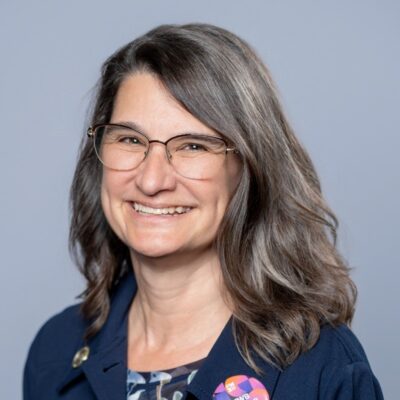
Deanna Landers, founder of Project Managers Without Borders (PMWB), shares how project management can deliver more than results, it can deliver hope. Now part of PMI, PMWB unites professionals worldwide to lead sustainable, humanitarian initiatives. Deanna discusses the organization’s growth, opportunities for volunteer project managers, and the parallels between navigating the open seas and managing complex projects. It’s an inspiring look at how our profession can create lasting impact, one project at a time.
Chapters
00:00 … Intro
01:01 … Velociteach PASSTrack™
02:15 … Meet Deanna
04:04 … Deanna’s Sailing Adventures
05:27 … Preparation and Lessons Learned
07:26 … Adjusting Expectations
09:30 … Project Managers Without Borders
11:27 … PMI’s International Board of Directors
13:14 … Logistics of PMWB
15:12 … How PMs Can Be Involved
17:06 … Having the Right Mindset
20:53 … Defining Project Success
23:41 … Sustainability and Maintainability
26:46 … Learning Moments as a PM Volunteer
29:05 … How To Find Projects
32:40 … Location Options
34:25 … Cultural Sensitivity
38:06 … Personal Reflections
39:41 … Advice to PMs
42:05 … Find Out More
43:28 … Closing
Intro
DEANNA LANDERS: But you touched on something else, and that’s the passion; right? If somebody’s saying, oh, I’m just going to help these people. I’ll just give it a little time. I’ll just do X, Y, Z. But if somebody’s really interested, they’re going to do a better job, and they’re going to make a difference, much more of a difference. And when you really think about it from a larger perspective, they’re going to get more out of it; right? If they’re working in a space where they’re passionate, and they’ll see what impact they’ve had, and they’ll really feel what of a difference they made.
WENDY GROUNDS: Hello, and welcome to Manage This, the podcast by project managers for project managers. We’re so glad you’ve joined us today. I’m Wendy Grounds, and in the studio with me is Bill Yates. If you’re enjoying the show, we’d love to hear from you. You can reach us on our website Velociteach.com, social media, or your favorite podcast app. We would love to get some feedback. And if you have any questions about our podcasts or project management certifications, we’re here to help.
Velociteach PASSTrack™
Are you looking to earn your PMP® certification? Here’s a message for folks who do not yet have their PMP certification but are considering taking the step. Velociteach has the proven system to get you there—and fast. We’re introducing Velociteach PASSTrack™. It’s an exclusive 4-step Proven Accelerated Study System. Designed with one goal in mind: your success on exam day.
Here’s how it works: First you Prepare with our Pre-Class Action Plan, it includes an online eLearning course and a quick Pre-Class Webinar. Next, you’ll attend four focused days of expert-led training with a Velociteach instructor. Next step is to study with our instructor–led Study Plan, using our accelerated tools, and practice with InSite® online eLearning access. And last step is Succeed—walk into your exam confident, and walk out a certified PMP®.
At Velociteach, your success is our mission. Together, we’ll get you across the finish line. PASSTrack™ is the signature system trusted by project managers worldwide.
Meet Deanna
So today we’re talking to someone who’s proving that managing projects doesn’t have to stay inside a cubicle. It can go anywhere people want to make a difference. Our guest is Deanna Landers, and she’s a true inspiration in the project management world and a visionary founder of Project Managers Without Borders. She currently serves on the board of directors of PMWB, and previously she served on the board of directors for IEEE, Smart Village, Metro Denver PM Education Foundation, PMI Mile Hi Chapter, and for six years on the International Board of Directors of PMI, leading the board as chair in 2013.
Before she founded PMWB, Deanna led transformative initiatives at Charter Communications as director of program management. Also, she had an 11-year tenure at IBM where she helped shape their acclaimed Project Management Center of Excellence and oversaw a $350 million portfolio of high-impact projects.
So, Project Managers Without Borders is an organization on a mission to make a positive difference worldwide through collaborative and sustainable initiatives. But here’s the real story. Deanna believes project management isn’t just about charts, budgets, deliverables. With PMWB she’s mobilizing professionals across the globe to tackle pressing humanitarian challenges and proving that skilled management can empower communities and can change lives. So, if you’re ready to be inspired and reminded that good project management doesn’t just deliver results, it delivers hope, stay tuned.
Hi, Deanna. Welcome to Manage This. Thank you so much for talking to us today.
DEANNA LANDERS: Thank you for having me.
Deanna’s Sailing Adventures
WENDY GROUNDS: I’ve been going through your website, and I’m very excited to share this topic with our audience. But as you know, before we get in there, we like to find out a little bit about you. And I think the thing that really stuck with us is you’ve been doing some sailing adventures. Now, Andy Crowe, our CEO and the founder of Velociteach, he went sailing for about five or six years.
BILL YATES: Pretty long sail, yeah.
WENDY GROUNDS: Yes, he and his wife just lived on a boat for a long, long time. And so, we have done a few podcasts with him talking about his sailing adventures. So why don’t you tell us a little bit about your sailing adventure and where you went.
DEANNA LANDERS: Sure, yeah. Well, we lived on a sailboat, a catamaran, for two years, so less than that. And it’s interesting the vocabulary is completely different. It’s like, you know, do I live on a boat? Do I cruise? Do I sail? Am I a live-aboard? I had to learn all that in the beginning. It was crazy. It was like, you know, a new project starting up, you know. But we were cruising; right? So, we lived aboard in the San Francisco Bay Area for a year and then kind of went out different places and Angel Island and other places with the Yacht Club and stuff. And then for a year we cruised down the coast of California, Baja, up into the Sea of Cortez, down to Barra de Navidad in Mexico. It was great.
Preparation and Lessons Learned
BILL YATES: That’s fantastic. Man. And I can just imagine, I mean, again I’m thinking back to some of the things that Andy and Karen described. And Andy is obviously big-time project manager. His brain is wired that way. And I’m sure for you, too, you probably had lists coming out of…
DEANNA LANDERS: Oh, yeah. Absolutely.
BILL YATES: So many things to check off the list. So much preparation. So much scheduling and charting a course and making sure provisions are there. Did you just feel like you were in the perfect Zen place as a project manager? Or were there some lessons learned that you took from that?
DEANNA LANDERS: All of that. All of the above, yeah. So, we felt prepared. I felt prepared, and I helped my family feel prepared, you know, because I, well, of course I had a risk log. And we identified and, you know, and there are parents saying, you know, it’s really going to be risky, and we’re concerned. But just like any project, there are all sorts of risks, and you get the resources that you need. You learn what you have to learn.
We prepared for that trip for something like three years. And it was – we thought we, well, of course we didn’t think we knew everything because, you know, being quite experienced in this world, we realized the more we – the more we live, the more we don’t know because there’s so much more that we know that there’s out there. So, and we also had all sorts of resources like a consultant who’s been doing this for, you know, more than 10 years, and all sorts of forums and things like that.
But the logistics, really surprising. I mean, you learn, okay, I’m going to do this. This is going to be easy. I’ve done this before. It’s amazingly complicated. It’s like so much time on that. But it was fantastic. It was – it was a great opportunity to apply project management skills in lots of different areas. Even the HR part, which you don’t really think, oh, you do that with your family, your friends. But you really do. Lots of stakeholders in the world.
Adjusting Expectations
BILL YATES: It’s funny, Deanna. I remember for Andy he had to kind of take the mindset of working with companies that have certain expectations, and you deliver when you say you’re going to deliver, you’re going to be there when you say you’re going to be there, that kind of thing. And then a lot of their sailing took place in the Caribbean. And the mindset there was just, you know, it was different in places. So, for him, he said he had to kind of take off one hat and put on another hat. And as a project manager, that can be extremely difficult.
And I think it almost leads us into our conversation about not-for-profits, NGOs, that I think some of the lessons you probably learned sailing were things that you had already seen as you were working with for-profit and then not-for-profit companies and thinking, okay, this requires a different way of thinking. I need to adjust my expectations. Is that true?
DEANNA LANDERS: Yeah, absolutely. And with, you know, the vast breadth of projects that I’ve been involved with, I’ve run into that before. You have customers who are on island time. And we chose to spend a lot of time in island time. And as a family, it was really kind of nice. But on top of it, you’ve got a boat you’ve got to get places, you’ve got to have provisions and all of that. And so, you need things on time.
And so, you know, from my perspective, I just put in a ton of contingency, you know, in that particular case. When you can’t control it, then you just make sure that you’re not going to, for instance, run out of fuel and food and parts or whatever.
But absolutely, in projects with not-for-profits, you run into situations where there’s a completely different culture than in the corporate world. And so, you know, listening, active listening, and understanding the differences. I think it’s an advantage to have managed a lot of variety, a lot of diversity of projects because, when a new one comes up, it’s like, okay, what are the little, the key little parts, sometimes they’re big, that I need to understand. And so, it was helpful in all of those cases.
Project Managers Without Borders
WENDY GROUNDS: Yeah. That leads us into talking about Project Managers Without Borders. And I really want to hear how this has evolved, how it came about, what was your mission and your vision initially for Project Managers Without Borders, and where you are today.
DEANNA LANDERS: Sure, yeah. So, I think it started when I was a child. No. But it kind of did; right? The personality develops as you grow up, and I was always out there doing things for people and recognizing that these skills that I had, whatever they were, not project management yet, we certainly didn’t know them as project management, but those skills were valuable. And as the profession evolved, and as I matured and got into my profession, I realized how valuable they were. And then in PMI, when I was on the PMI Board of Directors, I was going around telling everybody.
And you know, I traveled around the world, basically, to all of these project management events, telling everybody how important project management was, how project management is needed to accomplish anything in the world. You know, if you’ve got something that’s some unique endeavor, that it needs project management to be efficient and effective. And I believed that and recognized that, in a lot of the situations I was out there, you know, filling bags of food or volunteering for the Boy Scouts and those sorts of things, you know, helping with my skills.
I’ve always tried to help at the highest level; right? I would try to help the Boy Scouts with their processes, versus just filling out the forms or whatever. And I realized that, when part of PMI and how we were making such a huge difference at a much grander scale, that I could do that personally and bring a lot of other people with me to do that same thing and make a huge impact with our skills.
PMI’s International Board of Directors
BILL YATES: Share with our listeners, I think it was 2013, is that right, when you were chair of the board?
DEANNA LANDERS: Right, yes. I was Chair of the PMI’s International Board of Directors in 2013.
BILL YATES: Okay. That’s right. I’m kind of going in the Wayback Machine to remember because I can recall – I was on the advisory group with the REPs then, and I remember that you had served as the chair, and I couldn’t remember what year it was. So, this desire to start the organization started, like you say, it went way back. And then I guess as you had exposure to so much globally with PMI, did that just provide more fuel to that fire? Tell us about the timing, like when you said, “Okay, now is the right time for me to start this organization.”
DEANNA LANDERS: Yes. So, I actually took the idea to the Board of Directors, and we considered it as a group and decided that it really wasn’t in our scope at the time. And it really wasn’t. It wasn’t the right time. And that was that. PMI was not going to do that. And that was where my mind was. It was like, “Oh, it’s perfect. It’s going to be huge.” And then it was like, “Okay, it’s not. That does make sense. Okay.” And then – I can’t say, “Oh, here was the day. It was a Thursday.” Yeah, I can’t say that.
But at some point, I recognized, well, wait a minute, the idea isn’t dead. It’s not PMI’s, but it’s still mine. So yeah, I’ll just do this and see where it goes and, you know, take it where it can. And in my opinion, it’s very fortunate that now, or a year ago, was the time for PMI to decide, “Yes, this is in their plans. It is part of their scope. In fact, it’s part of their purpose to do this kind of thing.” And so, we joined PMI two Januarys’ ago.
Logistics of PMWB
BILL YATES: That’s super. So, before we get into that, walk us through some logistics of the organization. So, talk about Project Managers Without Borders in terms of, you know, maybe simply what types of projects does the organization take on? And then how do volunteer project managers plug into that? What does their participation look like?
DEANNA LANDERS: Okay, yeah. So, it changed; right. So, we’ve been around for what, now, 11 to 12 years. In the beginning, it was, all right, let’s just find somebody who needs some help and help them. Very, very coordinated effort. But then it became that we wanted to align ourselves with a UN Sustainable Development Goal. And we chose Clean Water and Sanitation. So, we partnered with organizations that handled that, that approached those needs. And so, we got together with Engineers Without Borders, and an organization in the Netherlands that taught water NGOs all sorts of techniques and tools and things like that. It was just whatever we could find in that space is where we focused.
And so, the kinds of projects really, even within that space, varied. We had – the Engineers Without Borders project was to get irrigation to a community in sort of the middle of the Andes, whereas there was one in Puerto Rico that was to get clean water to the communities after a hurricane. So, they varied tremendously then. And then after a while, we would change. We added more sustainable development goals to what we were doing. We added climate action. But now it’s not like that. It’s per chapter. And so, it’s not focused like that as an organization. Each chapter can have their own focus of PMI. So, it’s kind of hard to say, well, how does it happen? I could talk about now, or I could talk about before.
How PMs Can Be Involved
WENDY GROUNDS: Yeah. So now our audience are mostly project managers, and we want to encourage them to also become part of something like this, part of seeing what they can do. How would you recommend that project managers are uniquely positioned just to create some meaningful change within nonprofits and NGOs and just opportunities for them?
DEANNA LANDERS: It’s incredible the amount of impact that we can have. You know, when you just think of something like a soup kitchen, where I could go in, and I could ladle out the soup. Or I could go in, and I could help them identify how to ladle out more soup, or soup to more people, or do the exact same thing in multiple cities, or whatever it is. Or do it more efficiently, spend less money on the same.
So many opportunities that we provide with our skills as project managers. And so that makes it a huge difference. And when you think about that as a skill or a service that we can provide, that’s one thing. But on top of it, that’s still just fishing for them. If we can teach them to fish, it’s even better. And so, when we share our templates, we say, “Well, look at how we made this schedule for you.”
There was one, it was one of the beginning ones where we helped a hospital that was taking equipment from Denver to Arusha, Tanzania. And they had doctors and IT people, and they were all going on this mission. And we helped them identify that, when the power goes out, because it always goes out, what the IT people could do to help the clinical people, to really make the most out of their limited time there. And that kind of thing was an opportunity for them in the future and going forward to think that way, to use the tools that we provided and do it themselves.
Having the Right Mindset
BILL YATES: Yeah. For those project managers who you’ve seen really plug in and have success with nonprofits and NGOs, what’s different about their mindset? As you’re describing things, Deanna, I’m thinking of all the ways that I could screw this up. You know. So, what are some of the…
DEANNA LANDERS: Well, that’s not the mindset.
BILL YATES: Right? So, I can come up with a “Don’t do this” list. For those project managers who have done this well and been successful, what’s different about them?
DEANNA LANDERS: I think, well, really, they listen, and they’re open-minded. I’m going to have to tell a story. This is just – it’s fantastic. I think it’s one of our successes. So, we went into a project where there was irrigation for a community in the Andes, and we were working with Engineers Without Borders. And our project manager went in and found that the residents of the area, the community, they wanted it to be sprinklers. They didn’t want the underground that the engineers were recommending. And they said it was because they swapped crops, and it would be better for them.
Got back to the Engineers Without Borders meeting – I was actually in that meeting at the time – and told them, this is what’s going on. This is what we’ve learned. We’ve heard from the community. And the lead engineer says, “They don’t know what they need. They don’t know what they want.” And they went out there with all of their equipment to do what they thought that was needed, not even listening to the community. And the community physically blocked them from getting onto the field.
BILL YATES: No thank you, yeah, yeah.
DEANNA LANDERS: So, they didn’t listen to the project managers, and they really learned a powerful lesson. We had wished that they could learn it before they had the bad experience. But that was a great experience for them, to recognize, wow, if we had just listened. And that’s so important.
And I think it’s really critical for, you know, that project manager was super involved. He was not the first person to talk with them. This was maybe their eighth or ninth year with that community. And lots of people had talked with them. He went in knowing the language; right? The person that we provided knew the language. And it’s so critical to have that local knowledge and connection with who you’re helping because it’s the same thing. You can’t just say, “Hi, I’m on a high horse. I’m really good at lots of things. So, I’m going to tell you what you need.”
BILL YATES: That’s so true.
DEANNA LANDERS: It doesn’t make sense.
BILL YATES: Yeah, Deanna, I was thinking, even sometimes folks in our profession have – they have passion, which is awesome. They also have knowledge and experience, which is powerful. But then sometimes we can come in like a bull in a China shop and go, hey, everybody, you’re lucky to have me. Here I am to help you, you know, take this mission that your organization has to the next level.
So, it just smacks me that humility needs to be one of the first cards that I’m looking for in a leader who says, you know, I’d like to plug into this not-for-profit or this NGO and help out. Man, I’ve got to put my ego on the shelf. I need to put my pride on the shelf and be open. You know, that’s the key. That’s the key to listening well and making sure that I’m putting the sprinkler system in the way that they’re actually going to use it and accept it.
DEANNA LANDERS: Right.
BILL YATES: That’s a great – that’s such a visual. It’s a great story.
DEANNA LANDERS: Yeah. But you touched on something else, and that’s the passion; right? If somebody’s saying, oh, I’m just going to help these people. I’ll just give it a little time. I’ll just do X, Y, Z. But if somebody’s really interested, they’re going to do a better job, and they’re going to make a difference, much more of a difference. And when you really think about it from a larger perspective, they’re going to get more out of it; right? If they’re working in a space where they’re passionate, and they’ll see what impact they’ve had, and they’ll really feel what of a difference they made.
Defining Project Success
WENDY GROUNDS: And that redefines really what project success is because a project manager could go in there like the Engineers Without Borders and say, we’re going to do this, and they’re really going to be so successful. We’ll have the best apparatus you’ve ever seen. But that’s not really what project success is.
DEANNA LANDERS: Exactly.
WENDY GROUNDS: So, in an NGO humanitarian setting, how would you define project success?
DEANNA LANDERS: For us, it really matters. It’s really different because we’re not staying there. So, at a corporate level, project success is you, you know, here are your requirements and you meet those requirements, or whatever it is. But for us, I’ll just talk about that one same example. Other organizations had been there in that place, and they provided collection devices and tanks that no longer worked and nobody knew how to fix. And so, they thought they had had success. They were providing a benefit to the community. But it only lasted a few years.
And so, what’s important in every one of our projects is we understand how it’s going to move forward when we leave. It’s critical because we’re not going to stay there. So that’s not always part of project success when you’re doing a different kind of project for the corporate world. It’s just, all right, you’ve done it. Check. Move on. And you really need to think about that. We can’t say that success is the same for every project, though, either. So, we’re going in, and we’ve got the mission that I talked about, that the success was, well, did they take the equipment over? Absolutely. They took the equipment over.
And they found out that there were multiple opportunities for them to help. And that was great. And the volunteers, the doctors and the IT people felt wonderful afterwards. But the corporate wasn’t convinced that that was something that was valuable. And so, was it successful? For the most part. We actually created an impact report to help them recognize what that impact was, what success looked like for them. And in that particular case, they actually didn’t cancel the missions because of the impact report, because of what they saw was that impact and success.
But if you go to a different project, they’re going to have a different measurement. It’s not money necessarily. It could be money. It could be amount of water per person. It could be some level of health. It could be – there are so many different measurements, and it has to be determined by the project. So, it’s super hard to say, this is what success looks like. It’s really on a per-project basis. I know PMI is looking into how to measure that in our space. You know, we’re new in PMI, and it would be fantastic to be able to share that on a much bigger level because there are going to be more and more projects. So, I look forward to seeing that.
Sustainability and Maintainability
BILL YATES: It’s interesting too, Deanna brings up a point that I remember we had the conversation with the project manager Dave Maddux from Project Cure, and he talked about sustainability and maintainability. And sometimes the medical staff would say, oh, this would be fantastic, if we could have that equipment. But then they start looking at it and going, huh. But the nearest tech who could maintain this is about three countries away. So never mind.
DEANNA LANDERS: Exactly.
BILL YATES: So, you know, the equipment’s there. Yeah, we can deliver it. But, you know, it’ll be good until the maintenance is needed, and then you’re in trouble. So, it’s not usable.
DEANNA LANDERS: Right. And in some cases, what would happen is you’d get the equipment over there, and for some reason it doesn’t work. They don’t have the supplies for it. You know, maybe it’s a printer, and they don’t have the cartridges or whatever it is. And then they put it in a room because they’re not going to throw it away.
BILL YATES: Yeah, sure.
DEANNA LANDERS: That’s valuable stuff. And so, it’s taking up all this space. And, you know, whatever it is, it’s not a positive for them anymore at all. So that – and you’d have to think about all of these different things, yeah.
BILL YATES: You have to think it all the way through, yup.
DEANNA LANDERS: Well, that one I mentioned was a pretty big one, when they just wouldn’t listen. But like I said…
WENDY GROUNDS: Communication.
DEANNA LANDERS: That’s right.
BILL YATES: That’s a really big one, yeah.
DEANNA LANDERS: But I think it all worked out in the end. And I think that they really learned. Actually, we have had situations with, well, it’s a volunteer organization. And so, what we did in the beginning was made sure that we had two project managers for every role because people get a job, lose a job, go on vacation, get married, whatever. Things happen in their lives. And so, we made sure that we didn’t have that kind of a concern. But sometimes we would have little volunteer issues here and there.
We did have one situation where we were consulting for an organization that lit up countries, we’ll say. The people of certain countries that didn’t have any power, they were able to get them power, or at least light so they could do homework and do, you know, whatever it is during the day, they could do that at night, as well. And we were working with that company, had all sorts of benefits, and it was sort of a process improvement concept. And what ended up happening was that we had a chairman of the board who had been there the entire time, and in the end, identified that we were there, not to improve, but to take over all of his knowledge so somebody else could do it.
It was like, “Wait, how did – where did – that came out of nowhere.” And it was that founder kind of syndrome that, you know, we hadn’t really tapped into. And so, it’s like, “Okay, well, we learn all the time. That’s something that could happen again, so we’ll learn from that.” You know, backed up and made sure that our lane was very clear. And it’s really nice, really fantastic to run into these problems, especially early on; you know? Because then you learn from your mistakes, you can solve the problems sometimes while still in the situation. Lots of lessons learned, which of course you brought up earlier, Bill.
Learning Moments as a PM Volunteer
BILL YATES: It’s funny, Deanna, you know, I’m sure we’re going to get into benefits and kind of sell people further on, “Hey, you’re a project manager. You have a certain skill set. Why don’t you use this for good, you know, and volunteer?” But man, one of the quick takeaways to me, just as we’re talking right off the bat, is just, as a project manager, I can learn so much more about my craft just because of the uniqueness of these projects and maybe the environments where I’m working or the different personalities. And that’s such a strong takeaway.
And you can almost experiment or try different techniques that you’re afraid to try, so to speak, on the clock; you know? I don’t want to do this on my paid gig, but I’m really curious to see how this works. I’m going to try it out in this volunteer setting that I’m in because I think it could really be effective. So anyway, we’ll get more into that, but I can already hear it in some of the stories that you’re sharing. You know, just there are lessons that we’ll learn. We’ll get better as we volunteer in this space, as well. So, there’s a lot to be learned.
DEANNA LANDERS: Right. And then also on this NGO concept of, you know. So, we have, right now what we do is we have our project managers interviewed by the NGO. So, we make sure that they agree that that’s a – it’s a good fit. We didn’t before. Previously, it was just, you know, we made sure that we thought it was a fit, and we said, here’s who you get. And one of the challenges that we ran into there was in the beginning especially we had the NGOs. They’re getting this. They’re getting help, support, quote, “for free.” But of course, nothing’s for free. They needed to invest their time. They needed to provide us with information and things like that.
And so that’s one of the challenges in the beginning also is to make sure that everybody understands that situation. And, you know, though there’s no money changing hands, there’s something there for them to contribute because it’s not just, here’s a pamphlet that you can read at your leisure. It’s something that you need to really start working on.
And if we didn’t think that an organization was going to continue with the information, then we wouldn’t select that organization. We wouldn’t support that organization with something that, I mean, why would we waste our time and their time? So I think that only happened one time, but it’s true. You have to, you have to look at that.
How To Find Projects
WENDY GROUNDS: Logistically, how do you decide? Do you get organizations that approach you? Or do you just have, you know, members who look for projects they can get involved in?
DEANNA LANDERS: Yeah. There are I’m guessing about three different ways that that happens. From the beginning, it was me looking for organizations, and it really isn’t that difficult to look for organizations that need help; right? So, we had to identify from a marketing perspective, do we – do we go after the Red Crosses? No, we don’t go after the Red Crosses. They’ve got enough. They’re good.
But so, we figured out we needed the small to medium, especially those that have heard of project management, but didn’t really know how that could – could help them out. So, I would approach them and, you know, help them understand what project management is and how it might be able to help them learn a little bit about their organization. In a sense, you know, sort of a consulting gig, just to figure out if we could really make a difference with them. So that’s how it started.
Then we ended up with organizations in – we were part of the Posner Center in Denver, which is an organization of, it’s like 120 not-for-profits that are doing international development. And so, people would hear about us and say, “Oh, we’re interested in that.” So that was nice.
Now, within PMI, we have still a couple of ways to – three more, so I guess there were five so far – ways that we can get them. We have something on our website that says, “Are you interested in our services? Let us know.” We’ve always had that on our website. I don’t think, I don’t think we ever got a project, before being part of PMI, that we ever got a project through that.
But PMI has that, and they are – and the world’s changed, too. But they’re getting a lot of interest. I think something like 60 organizations within the last month or two we’ve gotten saying, “Oh, we really like your – your support.” And then in addition we’ve got chapters. PMI has something like 307 chapters, and each one of them may have a relationship with an NGO, or certainly the people within the chapter have organizations that they’re involved with that are NGOs.
Like I was saying, the Boy Scouts or a church or just some kind of charity that they deal with. And so, a lot of times they either already have a relationship with an organization as a chapter, or an individual might say, “Hey, why don’t we do this?” And so that’s the way that we see growth in Project Managers Without Borders now within PMI is through that chapter space. And then it could just grow from there.
BILL YATES: You know, I’m thinking, practically, too, there’s a hundred and something PMI chapters in the United States alone. In the United States you have Chambers of Commerce in most larger cities, or larger towns even. And that’s such a great place to go.
If the local PMI chapter is thinking, yeah, I’m not really sure, you know, what not-for-profits we have here locally, go to your Chamber of Commerce. They will gladly give you that resource if you can’t find it online already. And then it’ll really open the doors up to, “Okay, here’s some different organizations that we have locally that we can support as a chapter through this.”
DEANNA LANDERS: Exactly. And there are others that are supporting NGOs that we can partner with – Rotary and, like I said, Engineers Without Borders. We dealt with a chapter. It wasn’t the entire organization. They have chapters around, just like Rotary or Lions, whatever the organizations are. A lot of other organizations are out there, and we can make the most out of their relationships and do a partnership with them at all the different levels.
Location Options
WENDY GROUNDS: And you don’t necessarily have to travel. I can see some folks saying, you know, “I really can’t get to the Andes next month.” But it can be done remotely, as well.
DEANNA LANDERS: Absolutely. In fact, I believe – oh, no, I was going to say that was the only time we traveled. It’s not true. I think we traveled three different times. But that was the major place that we traveled. And as a matter of fact, it was near this project manager’s hometown, and he was doing the trip anyway. And so, he just did a little, you know, a side trip tangent for us. Almost everything that we do is, well, in the first 10 years it was almost all remote. Now that we’re looking into the chapter space, it can be much more in person. The Los Angeles chapter recently did a project with an organization called Karma, LA Karma. Anyway, something very close to that.
And they helped with a 5K. And it was in person and in person and in person. Lots of people; and, you know, a lot of people showed up. They coordinated with the time that PMI’s Global Summit was in Los Angeles. And a lot of us got to be part of that, as well, which was really nice. So yeah, I would say that it’s much more in person now because they have that local presence. The Without Borders concept started as, we’ve got a project. It doesn’t matter where the people are that are working on it.
And I really did have project teams with, you know, five people from five different countries. But one of the things that we did learn is that we absolutely needed that local knowledge; right? So, if we were going to be dealing with something in, well, in Ecuador in this particular case, it was fantastic to have somebody from Ecuador, either living there now, or from there with some sort of knowledge.
Cultural Sensitivity
BILL YATES: Talk a bit more about that because cultural sensitivity is obviously a key to success with these types of projects. What advice do you give to team leaders? Do you have, like, a “Hey, here’s the playbook that you need to run by. Every team member needs to go through the following?” Give us some advice on that.
DEANNA LANDERS: We don’t. Well, so I’ve done a lot of work internationally and have understood that the local concept is key; right? I can manage a project. I’ve managed projects in Mexico. I’ve lived there for six months. Well, now a year and six months, if you count the cruising, which you shouldn’t. But there are concepts that I don’t get, I don’t know, even though I’ve spent a lot of time there. And so, getting a person from the organization, the country, the community is really super important.
You know, we have run into situations where just knowing, for me, I’ll use the Mexico example, we were going to do a project in Mexico, and we were trying to determine if it was the right project to do, with Rotary actually. And we were talking with the people in the community. And generally, in Mexico, especially if you don’t know people very well, everybody is going to answer you very positively, even if the answer is no. And so, you know, it’s good to know that. I’ve experienced it in my professional life.
But you really need to ask the questions multiple ways to really find out the answers that you’re looking for because they, you know, they do want to please, especially if you’re going to come in and help them, in a way. And so, you know, those kinds of things are really critical to understand when you’re taking on a project.
WENDY GROUNDS: Yeah, that’s so interesting. My daughter’s done a lot of research in the nutrition field, and some of the work has been in countries like Somalia and Tanzania. And they would have people on the ground, local people, asking the questions to the folk that they were trying to research. Because if they went in themselves and asked the question, she said they would just get the folk giving them the answer they thought they wanted to hear.
DEANNA LANDERS: Exactly.
WENDY GROUNDS: They wouldn’t answer it. Yeah, just being culturally sensitive and talking to people in their own language and their culture is really important, yeah.
DEANNA LANDERS: And also, it’s not just a country thing; right? So, we had a project that was for road safety. And we’ve talked with all sorts of organizations. We’ve partnered with other organizations. And part of what we were doing was we were creating a booklet to honor victims, but also to help so that others wouldn’t run into the same situations. And one of the things that we recognized and learned about is that, in order to do the interviews of the people that we needed to write about, we really needed to have skills that project managers didn’t necessarily have. You know, because you’re dealing with people who are grieving or and have been grieving, and you don’t want to make the situation worse in any way.
And so, understanding of the domain. And, you know, there are lots of areas where that understanding can be valuable. From a PMI perspective now, since we have those local projects, we don’t have to worry too much about that because the project will be in the same space geographically as the PMI chapter. But PMI also is doing projects, I should say PMWB within PMI is doing projects globally, as well. So, kind of the model that we had originally, taking people from lots of different areas and doing them in a remote manner. And so those concepts apply there, but it’s not as easy. They still need to find those local connections.
Personal Reflections
WENDY GROUNDS: What does it mean for you personally? Because when you started out, it was initially, oh, this is a PMI thing we can do. And then you took it, and it grew on your own. And now it’s kind of come back full circle.
BILL YATES: Full circle.
WENDY GROUNDS: Yeah. And you’re – you’re collaborating with PMI, part of PMI. So, what does that mean for you?
DEANNA LANDERS: Oh, yeah. It’s – it’s obviously fantastic. I wasn’t planning on integrating with PMI in the beginning. You know, when I started it, it was, you know, not going to happen in PMI. And then we moved forward. But then of course we had a succession plan. And at some point, we were going to become a part of another organization, or it was just going to go off on its own. And so, what’s really exciting to me is that we did end up with PMI; right? We actually had a secret hidden list of organizations that we would contact to see if they would want to partner with us. And I’m really glad that it turned out to be PMI that we ended up with.
And for me personally, PMI has been so important in my life. I have been a member for, what is it, 27 years or something like that. And I feel like I’ve gotten so much professionally from PMI. And I’ve given to PMI a ton, as well. But through PMI, I’ve been able to make a difference in other people’s lives, as well, at a large scale. And so I’m really happy that PMWB is part of PMI. It’s important to me that that’s where we ended up. I’m really glad it happened.
Advice to PMs
BILL YATES: Deanna, what advice would you give to project managers who are looking to balance a demanding career with some kind of purpose-driven volunteer work?
DEANNA LANDERS: Yeah, well, that’s really what it’s all about is balance in our lives. I got an MBA while I was working full-time; and I decided to have a child in the middle of my later life, not so early; and, you know, things like that. And it just – it really is all about balance. And really, where that comes from is prioritizing. We can’t do everything at all times, but we can do everything. I feel like every time I’ve grabbed something and said, “Okay, this is what I want to do,” I’ve absolutely focused on it, and I made it happen. Now, unfortunately, I haven’t chosen something like world peace yet. But I’ve gotten things, you know, goals that were attainable.
And I think when we prioritize, then we can make it happen, just like exercising or eating right. When we prioritize it, it makes a difference. So, from the volunteering perspective, you’re absolutely right. You can volunteer an hour a week, 10 hours a week, whatever you want. You can volunteer for two weeks, for one day, for a year. And so, finding the role that works for you is what I would suggest. I actually have some volunteers. It’s really nice to have the repeat volunteers, in my mind. I have some that will call me and say, “All right, the child has been born. He’s one and a half years old, and I feel like I have a bit of time now. Is there anything you have for me?”
And I so appreciate that because I don’t want that person to be, you know, resenting PMWB or the client or the partner or whatever. He should focus on his baby. But now he still wants to get back to it. And he gives me the parameters. Well, this is the way it was. Now things are different. You know, people are chosen differently.
It’s not everybody goes through Deanna. You know, the first 10 years it was, “You have an interview with Deanna, and then we’ll see how it goes.” But it’s different now. It’s, you know, there’s more, a little bit more process. It makes more sense. It’s more scalable. But yes, absolutely. There’s so much that can be done in a small amount of time. And when you’re passionate about something, you might actually want it to expand.
Find Out More
WENDY GROUNDS: Finally, Deanna, how can our audience find out more? If they want to get involved, if they want to get in touch with you, where should they go?
DEANNA LANDERS: Well, we have PMWB.org as a URL, and it goes to a PMI URL after that. But that’s the easy one that I can remember. So, there’s all sorts of information out there. And actually, NGOs can go out there and get access to information, not just volunteer. So, all the different stakeholders can find all sorts of information out there on that website. And then from a personal perspective, I have LinkedIn, and I can be reached out to in that way. That’s probably the best way to reach me, unless you have my cell phone number, but I don’t give that out on podcasts.
BILL YATES: Well, Deanna Landers, you have made such a difference in the project management community. I think about your obvious leadership within PMI in the years that you’ve committed to that, and just the huge impact you’ve had with Project Managers Without Borders. It’s just a huge impact. We’re excited to see where it is today. It’s fun to go back and see where it started. And this little seed of passion that you had, even as a kid, you knew this was going to happen. It was just a matter of time. So, thank you for all that you’ve done, and thanks for spending the time with us today sharing this.
DEANNA LANDERS: Thank you. I appreciate it.
Closing
WENDY GROUNDS: That’s it for us here on Manage This. Thanks for hanging out with us today. It’s always a pleasure to have you along for the ride. Don’t forget, you can visit us anytime at Velociteach.com to subscribe, catch up on past episodes, or read the full transcript of today’s show.
And now it’s time to reward yourself. You just earned free PDUs for listening. To claim them, go to Velociteach.com. Click on Manage This Podcast at the top of the page. Then hit the Claim PDUs button and follow the simple steps.
We’ll be back soon with more insights, stories, and strategies to help you master the art of project management. Until next time, keep your projects and coffee cups filled to the brim. Stay curious, stay inspired, and keep tuning in to Manage This.






Leave a Reply